


By Somalilandpost | Analysis
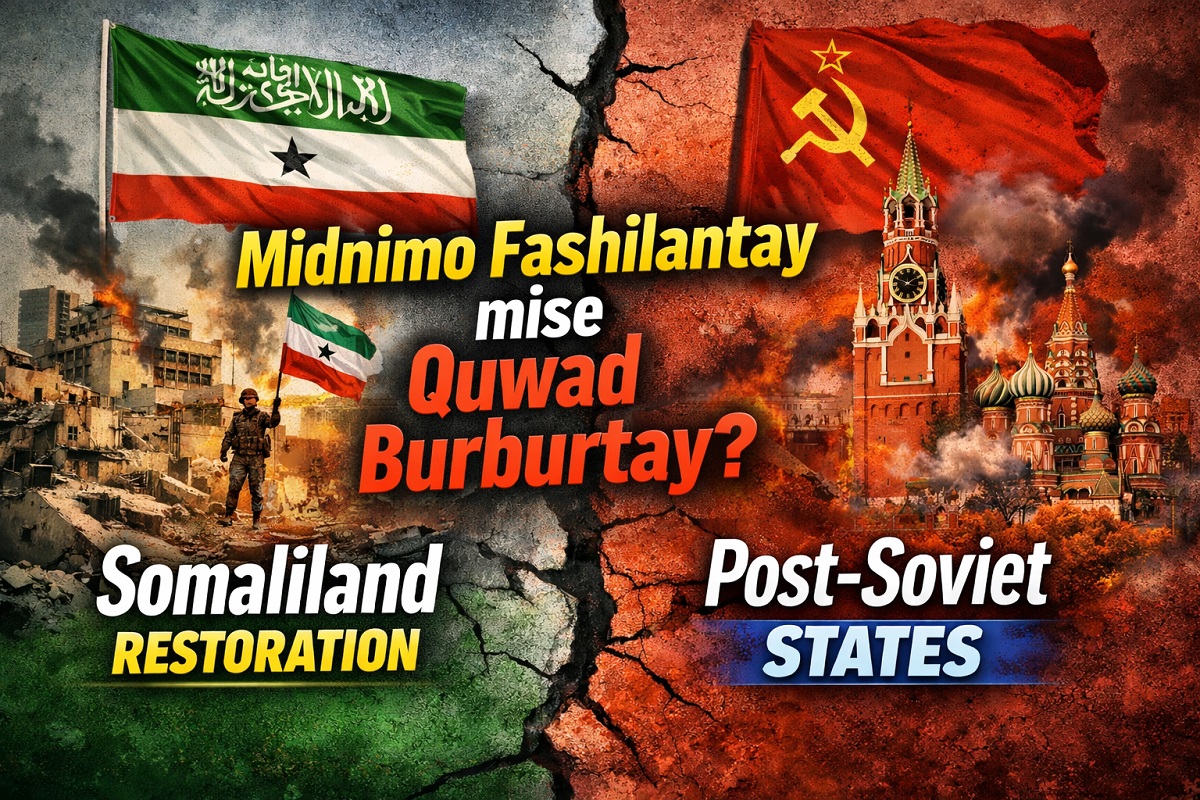
For decades, Somaliland has pursued international recognition, often compared—incorrectly—to post-Soviet states that emerged after the collapse of the USSR. While the comparison is common in public debate, it is legally, historically, and politically flawed. Somaliland’s case stands apart in several decisive ways.
A Restored State, Not a New One
Somaliland is not attempting to create a new country. It is seeking to restore sovereignty it already possessed.
In June 1960, Somaliland became a fully independent and internationally recognized state. More than 35 countries recognized it before it voluntarily united with Italian Somalia days later. That union, however, was never completed through a properly ratified legal instrument accepted by both sides.
By contrast, post-Soviet states were never independent countries before 1991. They were internal republics of the Soviet Union and gained independence only after the USSR ceased to exist.
Withdrawal from a Failed Union vs. Collapse of a Superpower
Post-Soviet independence occurred because the parent state collapsed. The Soviet Union dissolved, creating successor states overnight.
Somalia, however, did not collapse as a legal state when Somaliland withdrew in 1991. Somaliland’s argument is based on withdrawal from a failed and abusive union, not on opportunistic secession.
This distinction matters in international law, which is more receptive to restoring a previously recognized state than endorsing new breakaway entities.
Borders That Respect African Legal Norms
Somaliland’s borders exactly match those of the former British Somaliland protectorate. This aligns fully with the African Union’s core principle of uti possidetis juris, which preserves colonial borders to prevent instability.
Many post-Soviet borders, on the other hand, were internal administrative lines, often disputed or revised after independence.
No Legal Exit, No Consent
The Soviet constitution explicitly allowed republics to secede. Somalia’s union with Somaliland offered no legal exit mechanism, and the 1961 referendum on the union was overwhelmingly rejected in Somaliland.
This strengthens Somaliland’s case that the union lacked consent and legitimacy from the outset.
Remedial Grounds: Atrocities Matter
In the late 1980s, Somaliland suffered state-directed mass violence, including the destruction of major cities and civilian targeting. These events place Somaliland within the framework of remedial secession, a doctrine increasingly cited in international legal discourse.
Post-Soviet states did not, as a rule, separate due to systematic atrocities committed by the central government against a specific republic.
Three Decades of De Facto Statehood
Since 1991, Somaliland has maintained:
- Internal peace and security
- Democratic elections
- A functioning currency
- Defined borders and governance
This long-term stability contrasts with several post-Soviet states that required immediate international intervention or remain contested today.
So Why the Difference in Recognition?
The rapid recognition of post-Soviet states was driven by geopolitics, not legal superiority. Major powers urgently needed stability after the fall of a nuclear superpower. Somaliland lacks such a geopolitical moment—despite having a stronger legal and historical case.
Conclusion
Post-Soviet states emerged because a superpower collapsed.
Somaliland seeks recognition because a voluntary union failed.
Understanding this distinction is essential for fair international discourse. Somaliland’s case is not an anomaly—it is a restoration claim grounded in international law, African norms, and three decades of demonstrated statehood.