


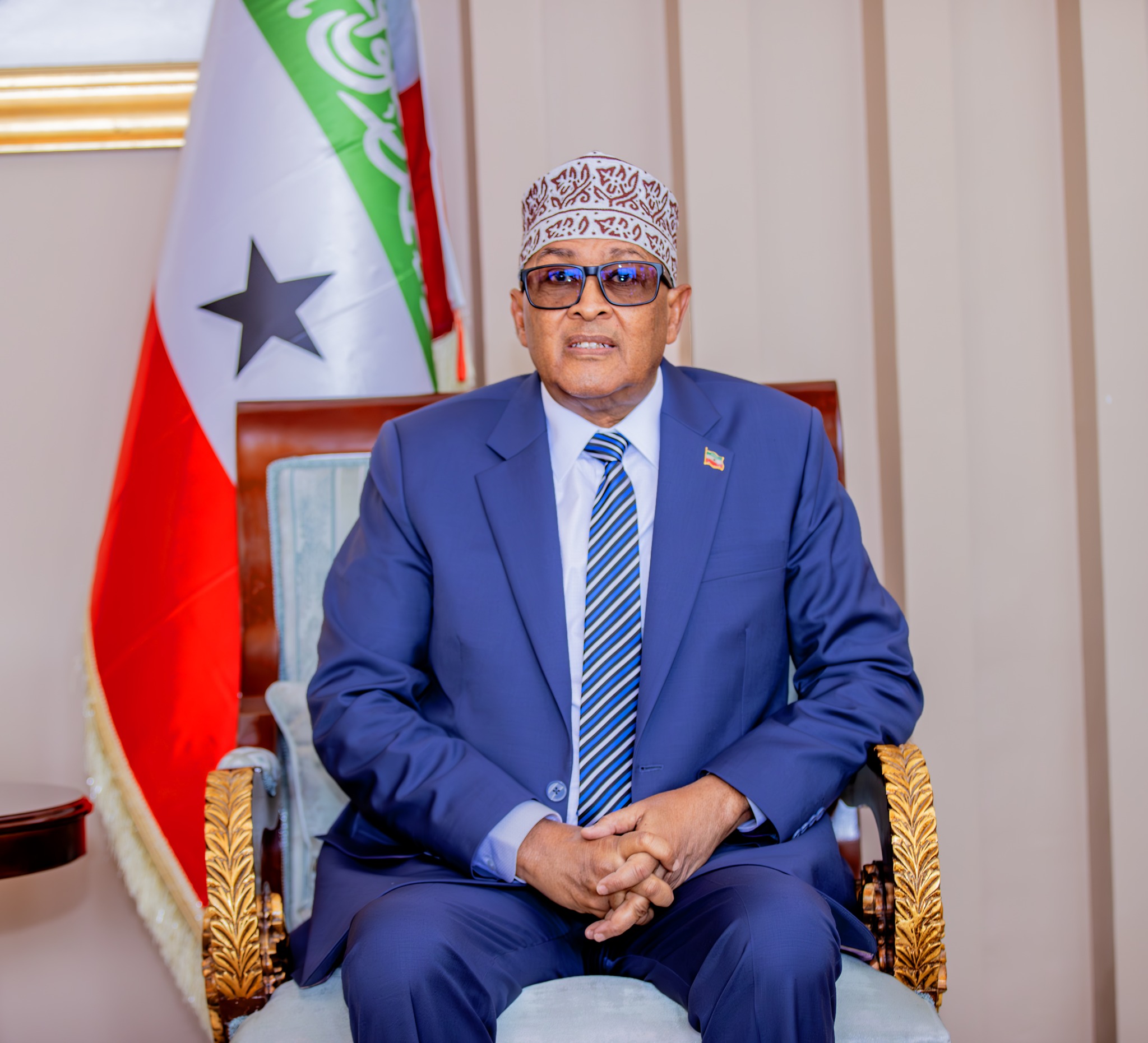
Somaliland is seeking to capitalize on Israel’s recent recognition of the self-declared republic by intensifying diplomatic outreach to the United States and other major capitals, pitching itself as a strategic and resource-rich partner in a volatile region, President Abdirahman Mohamed Abdilahi said.
Speaking in an interview with Semafor on the sidelines of an international forum in Dubai, Abdilahi described Israel’s decision as a turning point for Somaliland, which has operated as a de facto independent state since breaking away from Somalia in 1991.
“The recognition of Somaliland was a historic moment for myself and for my people,” Abdilahi said. “More people will pay attention. Somaliland is now used in every language in the world, and that in itself is a major impact.”
In December, Israel became the first country to formally recognize Somaliland, a move that immediately triggered condemnation from the African Union, the European Union, and several influential states, including China, Egypt, and Saudi Arabia. The development has also intensified scrutiny of Somaliland’s close ties with the United Arab Emirates, a relationship that has become another point of friction amid broader geopolitical rivalries in the Gulf.
Abdilahi said the backlash was anticipated. “Negative reactions were mostly based on interests, or some didn’t know the history of Somaliland,” he said, emphasizing that Somaliland voluntarily united with Somalia decades ago in pursuit of pan-Somali unity. “We are older than Somalia,” he added.
Despite the controversy, Somaliland plans to continue pursuing international recognition through quiet diplomacy. “We are working hard to get more friends and countries,” Abdilahi said. “But we have more enemies than before, so everything has to be done discreetly.”
At the same time, the Somaliland leader signaled an intention to deepen ties with Israel, including plans to open embassies and exchange commercial attachés. He highlighted Israel’s technological expertise as a key attraction. “Israel is a highly technologically advanced country,” Abdilahi said. “We want to benefit from their technology in education, agriculture, science, and water.”
Looking to Washington, Abdilahi framed Somaliland as a potential strategic ally for the United States, particularly under President Donald Trump’s transactional foreign policy approach. He underscored the territory’s location along the Red Sea and the Horn of Africa, as well as its untapped natural resources.
“We have an abundance of natural resources, including minerals. We have oil and gas. We have very large arable land for agriculture,” he said. “We have the best beaches in the world.”
Supporters of Somaliland in Washington argue that recognition could provide the US with a reliable security partner in a critical maritime corridor. Analysts note that Somaliland’s coastline could offer strategic advantages for monitoring weapons flows, Houthi activity in Yemen, and China’s expanding footprint in the region, including Beijing’s military base in neighboring Djibouti.
Economically, the UAE remains Somaliland’s most significant external backer. Through port operator DP World, Abu Dhabi has invested more than $400 million in expanding Berbera Port to handle the world’s largest cargo vessels, alongside the development of a manufacturing and trade zone. The project has positioned Berbera as a potential logistics hub for the Horn of Africa, including landlocked Ethiopia.
As global attention intensifies following Israel’s recognition, Somaliland now faces a complex diplomatic landscape—balancing new opportunities for legitimacy and investment against rising geopolitical resistance in a region already shaped by strategic rivalries.
somalilandpost.news/ Team