
The controversy now risks becoming larger than the question of who chairs SOLJA.
Analysis By Somalilandpost News
The leadership crisis engulfing the Somaliland Journalists Association (SOLJA) has taken a political turn, with allegations that the administration of President Abdirahman Mohamed Abdullahi “Cirro” played a decisive role in the removal of the association’s chairman and the installation of a new leadership.
A group of SOLJA executive members recently moved to remove Chairman Shafici Mohamed Farah and subsequently elected Ahmed Khalid Farah as the new chairman. The move has been rejected by Shafici, who has described the process as unlawful and alleged that government interests were behind the attempt to remove him.
At the centre of the dispute is a fundamental question: Was the SOLJA leadership changed because of an internal administrative crisis, or was the organisation’s leadership effectively overthrown through political pressure?
Government Criticism at the Heart of the Dispute
The allegations against the government have emerged against the backdrop of increasingly strained relations between SOLJA and the Cirro administration.
SOLJA has repeatedly spoken out over the detention and treatment of journalists, positioning itself as an advocate for press freedom and the protection of journalists. Its criticism of government actions has increasingly placed the organisation at odds with officials.
Shafici Mohamed has claimed that some members of the executive leadership approached government authorities and accused him of engaging in political activities rather than maintaining cooperation with the administration.
He has rejected that justification, arguing that his removal was not conducted according to SOLJA’s internal rules and that a chairman elected through a legitimate process cannot simply be removed without following the organisation’s established procedures.
More seriously, the former SOLJLA leader has alleged that external actors, including government interests, were involved in pushing the leadership change.
If substantiated, such intervention would represent a serious challenge to the independence of one of Somaliland’s most important organisations representing journalists.
The Official Explanation: Internal Deadlock
The newly elected chairman, Ahmed Khalid Farah, has offered a different explanation.
According to Ahmed Khalid, SOLJA’s Board had been experiencing disagreements and prolonged deadlock, with some meetings delayed because members were unable to reach consensus.
He presented the leadership change as an internal response to an organisation that had become increasingly difficult to manage.
That explanation provides the immediate and visible justification for the change: institutional disagreement, management paralysis and a breakdown of consensus within the Board. But it does not, by itself, settle the larger political question.
Why the Government Allegation Matters
SOLJA is not an ordinary civil society organisation. Its mandate directly concerns the independence of journalists, freedom of expression and the relationship between the media and government.
That makes any alleged government involvement in its leadership particularly sensitive.
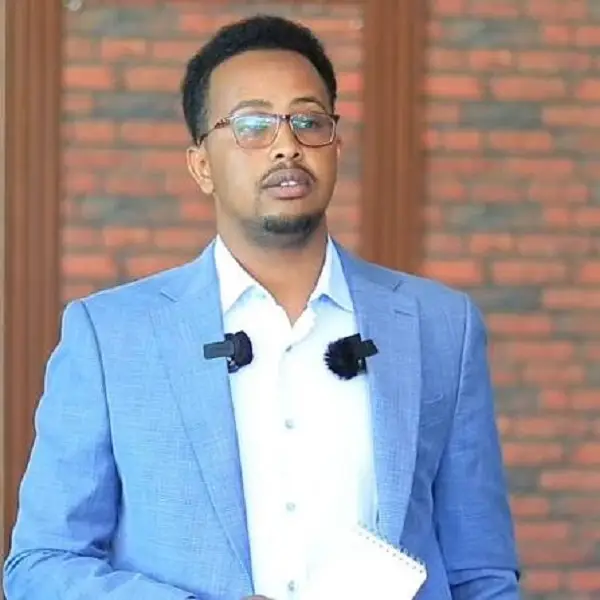
Shafici’s recent criticism of the detention of journalist Abdiqani Baylood has further intensified scrutiny surrounding the dispute. He had publicly urged journalists to exercise caution in responding to summons from the Criminal Investigation Department unless such summons were backed by a court warrant.
Against that backdrop, the sudden removal of a chairman who had been publicly confronting authorities over the treatment of journalists inevitably raises questions about whether the leadership dispute is purely administrative.
A Test for Media Independence
The controversy now risks becoming larger than the question of who chairs SOLJA.
If the new leadership emerged entirely through a lawful internal process, the organisation should be able to demonstrate that its constitution, procedures and governance rules were followed.
If, however, government pressure or political intervention influenced the removal of the previous leadership, the episode would raise much more serious concerns about the independence of Somaliland’s media institutions.
The allegation of government intervention remains an accusation made by the former chairman and has not been independently substantiated by publicly available evidence. However, the possibility of such involvement cannot be entirely dismissed when considered within the broader context and the sequence of events.
Nevertheless, the controversy has created a credibility test for both sides.
The new leadership must demonstrate that its election was legitimate and procedurally sound. The former leadership must substantiate its claims of political interference. And the government faces growing pressure to clarify whether it had any role in the internal affairs of SOLJA.
Ultimately, the question is not simply who controls SOLJA. It is whether a journalists’ organisation can remain independent when its leadership comes into conflict with the government it is expected to scrutinise.
An In-depth Analysis By Somalilandpost News