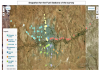
As Houthi attacks continue to threaten commercial shipping in the Red Sea and the Bab el-Mandeb Strait, the strategic importance of Somaliland is coming into sharper focus in Washington.
Located along the Gulf of Aden, Somaliland occupies a position overlooking one of the world’s most critical maritime corridors. Its stability, strategic coastline, growing Berbera port and willingness to cooperate with the United States have increasingly strengthened the argument that Somaliland could become an important American partner in securing the Red Sea and wider Horn of Africa.
For Somaliland, the current geopolitical environment represents more than a security challenge. It is an opportunity to demonstrate why its location and political stability make it a valuable partner for Western powers.
Speaking to Fox News Digital, Bashir Goth, Somaliland’s Representative to the United States, emphasized the territory’s readiness to work with Washington on regional security.
His remarks capture the central argument behind Somaliland’s growing diplomatic campaign: at a time when the Red Sea is becoming increasingly contested, Somaliland offers Washington a stable partner positioned directly on the Gulf of Aden.
Somaliland’s Strategic Geography
The Bab el-Mandeb connects the Red Sea with the Gulf of Aden and the Indian Ocean. Any prolonged disruption in this corridor can have consequences far beyond the Middle East and Horn of Africa, affecting international shipping, supply chains and global trade.
Somaliland’s coastline places it close to this strategic maritime chokepoint.
This geography has long been one of Somaliland’s strongest arguments for deeper engagement with international partners.
The development of Berbera Port has further increased the territory’s strategic relevance. The port has the potential to serve not only commercial and regional trade interests but also wider logistics and maritime-security requirements.
For Washington, Somaliland’s location could provide an additional strategic option at a time when the security environment around Yemen and the Red Sea is becoming increasingly unpredictable.
Stability in a Volatile Region
Geography alone, however, does not explain Somaliland’s appeal.
Somaliland has spent decades building its own political and security institutions and maintaining relative stability despite the conflicts that have affected parts of the wider region.
Its authorities have also consistently positioned Somaliland as a partner in combating terrorism, extremism, piracy and other transnational security threats.
That record is particularly significant as the United States confronts an increasingly complex security environment stretching from the Red Sea to the Gulf of Aden and across the Horn of Africa.
Somaliland’s message to Washington is therefore increasingly straightforward: it is not asking to become strategically important; its geography already makes it important. What it seeks is recognition of that reality through a deeper political and security partnership.
The Houthi Threat Changes the Calculation
The continuing Houthi attacks on shipping have reinforced the strategic importance of the southern Red Sea.
The attacks have demonstrated that relatively small militant forces can create significant disruption to international maritime commerce when they operate near critical chokepoints.
For the United States and its allies, protecting freedom of navigation therefore requires more than naval capabilities. It also requires reliable regional partners with strategic locations, intelligence capabilities, logistical infrastructure and political willingness to cooperate.
This is precisely where Somaliland believes it can contribute.
Bashir Goth’s statement that Somaliland’s defense officials are in active dialogue with U.S. Africa Command, or AFRICOM, underscores Hargeisa’s efforts to position itself as a security partner rather than merely an aspiring diplomatic partner.
A Changing U.S. Strategy in the Horn
For years, Djibouti has been the principal American military hub in the Horn of Africa. The country hosts Camp Lemonnier and has played a central role in U.S. counterterrorism and maritime-security operations.
However, the strategic environment around Djibouti has changed substantially.
China’s military and economic presence in Djibouti has expanded, creating new concerns in Washington about Beijing’s influence near one of the world’s most important maritime corridors.
This does not necessarily mean that the United States will abandon Djibouti. Instead, it could encourage Washington to diversify its regional relationships. From Somaliland’s perspective, this is where Berbera becomes particularly significant.
A stronger U.S.-Somaliland relationship could provide Washington with another strategic partner on the Gulf of Aden while reducing dependence on a single regional location.
Berbera: Somaliland’s Strategic Asset
The transformation of Berbera into a modern commercial and logistics hub has strengthened Somaliland’s case for international engagement.
Its location gives Berbera direct access to the Gulf of Aden, while its proximity to Ethiopia and the wider Horn of Africa provides potential commercial and logistical advantages.
For Somaliland, investment in Berbera is not simply an economic project. It is also part of a broader effort to demonstrate that Somaliland can provide strategic infrastructure for international partners.
A stronger relationship with Washington could potentially expand cooperation in maritime security, intelligence, logistics, counterterrorism and protection of commercial shipping.

Recognition Remains the Central Question
The security argument inevitably leads to the larger diplomatic question: could the United States eventually recognize Somaliland?
Washington has so far maintained its longstanding policy of recognizing Somalia’s territorial integrity, while AFRICOM has indicated that there are no current plans for a U.S. military base or a formal recognition decision.
That position demonstrates that strategic engagement should not be confused with imminent diplomatic recognition.
Nevertheless, Somaliland’s advocates argue that the changing geopolitical environment should force Washington to reassess an approach developed under very different regional circumstances.
They contend that Somaliland’s democratic institutions, stability, strategic geography and cooperation with Western security interests distinguish it from many other actors in the region.
From this perspective, recognition would not simply be a political concession to Hargeisa. It could be viewed as a strategic investment in a reliable partner positioned on one of the world’s most important maritime routes.
Somaliland’s Moment of Strategic Opportunity
The convergence of several developments—the Houthi threat, growing competition between the United States and China, instability around the Red Sea, Ethiopia’s search for reliable access to maritime trade and the expansion of Berbera Port—has created an unusually favorable strategic environment for Somaliland.
The question is no longer simply whether Somaliland has strategic value.
The question is whether Washington is prepared to translate that strategic value into a more formal and consequential partnership.
Somaliland’s message is increasingly confident: it has the geography, the stability and the political will to stand alongside the United States.
As Bashir Goth put it: “Somaliland is that partner.”
For Washington, the strategic calculation will ultimately depend on whether the benefits of a closer relationship outweigh the diplomatic costs.
But as the Red Sea becomes an increasingly contested theater, Somaliland’s position on the Gulf of Aden is becoming too strategically significant to overlook.
Reporting by Somalilandpost News