

“Somaliland’s national goal of recognition and sustainable statehood is attainable only if pursued through sequenced and resource-aligned instruments”
Introduction
Somaliland, though lacking international recognition, has emerged as a relatively stable and self-governing entity in the Horn of Africa. Its peace-building, democratic governance, and institutional resilience stand in contrast to its fragile neighbors. Yet, Somaliland’s aspirations are constrained by its lack of formal sovereignty, limited economic diversification, and vulnerability to regional politics. The state’s trajectory depends on aligning its national goals with its available resources and applying instruments that maximize its comparative advantages while addressing internal weaknesses. This analysis examines Somaliland’s core national goal, its resources and capabilities, and evaluates which instruments best advance its long-term strategy.
National Goal
Somaliland’s primary goal is international recognition and sustainable statehood. Recognition is not merely symbolic; it provides access to international financial institutions, development aid, and bilateral agreements. However, recognition cannot be pursued in isolation. It is inseparably tied to domestic legitimacy, economic resilience, and regional integration. Thus, Somaliland’s broader national goals include:
- Securing recognition without undermining peace and stability.
- Building a diversified, sustainable economy.
- Strengthening democratic and institutional capacity.
- Positioning itself as a reliable partner in regional and global security.
Resource Capability
- Natural Resources
Livestock remains the economic backbone, but it exposes the economy to drought and export-market fluctuations.
Fisheries in the Gulf of Aden are underdeveloped, leaving untapped potential for revenue and food security.
Oil and minerals represent long-term prospects, yet they are politically risky and capital-intensive.
- Human Resources
A youthful population offers potential for growth but also presents a risk of unemployment-driven instability.
The diaspora network provides remittances, skills, and diplomatic lobbying but is not systematically integrated into national planning.
- Institutional Resources
Somaliland boasts functioning democratic institutions with periodic elections and a hybrid clan-state system.
However, governance still suffers from corruption, limited judicial independence, and reliance on traditional conflict mediation.
- Geopolitical Capability
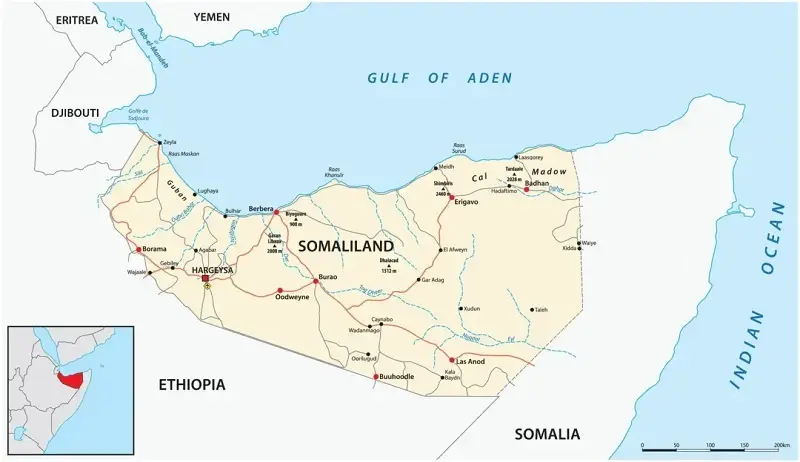
Strategically located on the Gulf of Aden, Somaliland is a potential logistical and security partner for global trade.
Its stability in a volatile region enhances its bargaining position. Yet, Somalia’s sovereignty claims and regional rivalries (Ethiopia, Gulf States) complicate its diplomatic space.
Instruments to Adjust the Goal
- Diplomatic Instrument
Somaliland must leverage its stability and democratic credentials as bargaining tools. Partnerships with Ethiopia, the UAE, and Taiwan show pragmatic steps, but overreliance on few allies is risky. A dual approach—engaging sympathetic states while strengthening multilateral visibility (e.g., African Union fact-finding missions)—is crucial.
- Economic Instrument
Recognition efforts will be more convincing if Somaliland demonstrates economic self-reliance:
- Diversifying exports into fisheries and frankincense alongside livestock.
- Berbera Port development as a regional hub, linking landlocked Ethiopia to global markets.
- Diaspora-driven investment through structured bonds and incentives.
Without visible economic progress, diplomatic claims risk being undermined.
- Institutional Instrument
Strengthening the rule of law and curbing corruption are preconditions for both investment and recognition. Institutional reforms should prioritize judicial independence, decentralization, and professionalization of civil service. Weak institutions remain Somaliland’s Achilles heel despite its democratic reputation.
- Social and Cultural Instrument
Sustaining peace requires balancing clan-based politics with national identity. Education reform to reduce unemployment and promote innovation is equally critical. In diplomacy, Somaliland could use cultural diplomacy—portraying itself as a model of reconciliation and democracy in Africa.
- Security Instrument
Somaliland’s location gives it leverage in global security dynamics. By contributing to anti-piracy operations and counterterrorism, Somaliland can elevate its strategic value. However, militarization without recognition could backfire if it draws the region into proxy rivalries.
Analysis: Alignment and Prioritization
A critical analysis shows that not all instruments are equal in priority or feasibility:
Institutional reform is the foundation. Weak institutions undermine every other instrument. Without credible governance, neither investment nor recognition will materialize.
Economic diversification is the second priority. A livestock-dependent economy is highly vulnerable; port development and fisheries expansion are practical short-term wins.
Diplomacy should follow, building on domestic credibility and economic progress. Recognition is more likely if Somaliland is seen as a stable, self-sufficient partner rather than a fragile aspirant.
Security contributions and cultural diplomacy act as complementary tools that enhance visibility and credibility but should not overshadow internal development.
Conclusion
Somaliland’s national goal of recognition and sustainable statehood is attainable only if pursued through sequenced and resource-aligned instruments. Its strongest assets are its stability, democratic institutions, diaspora network, and strategic location. Yet, overdependence on livestock, weak institutions, and geopolitical constraints threaten its aspirations.
The path forward requires:
- Prioritizing institutional reforms and good governance.
- Diversifying the economy through fisheries, port development, and structured diaspora investment.
- Using diplomacy and security partnerships as external leverage once domestic capacity is reinforced.
Recognition will not come merely through diplomatic appeals but through Somaliland’s ability to demonstrate sustainable governance and resilience. If it aligns its instruments strategically with its resources, Somaliland can transform its de facto stability into de jure sovereignty.
By Mohamed Abdi Muhumed
Somaliland Institute of diplomacy
MoFA Somaliland
Foreign and international Affairs