

The argument between two visible artists may attract the public’s attention. But the constitutional and legal question reaches much further
Analysis By Mohamed Ahmed Ba’alul
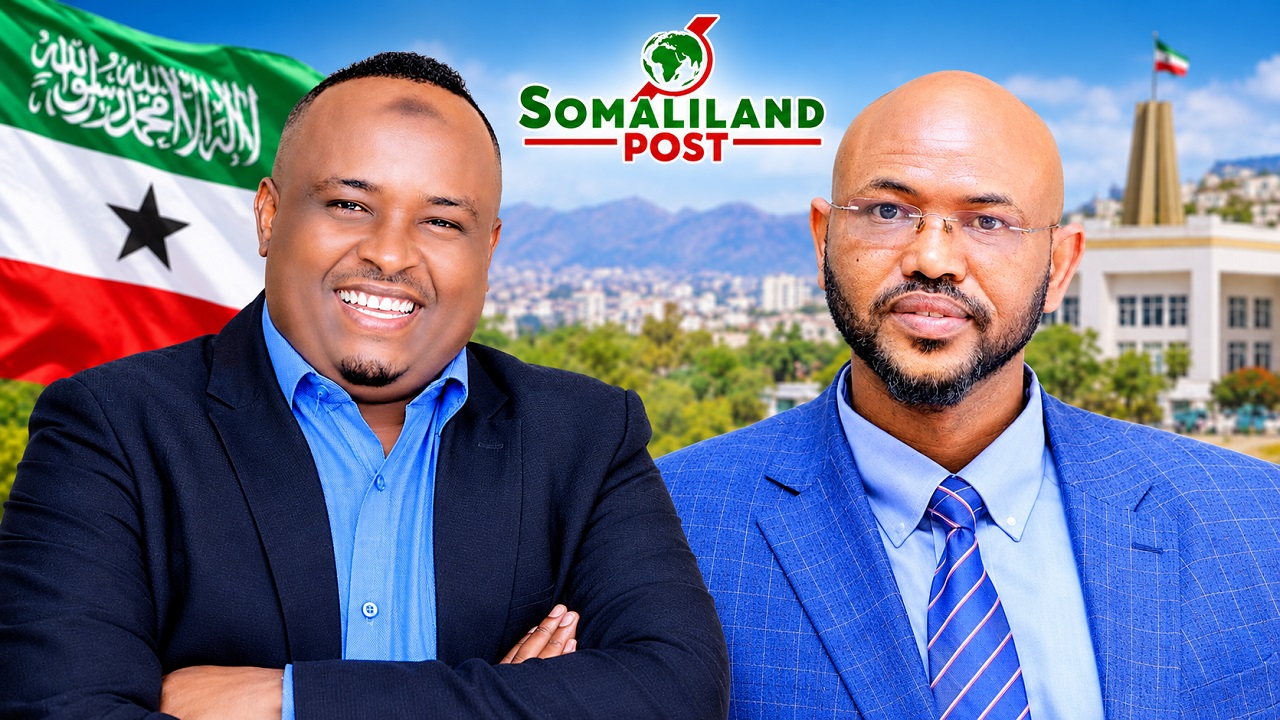
The viral brawl between the artists on social media is the talk of the day. Mr. BK, once a widely adored singer, could not quite find himself in the pulsating stages and thunderous applause after he returned from the solemn mosque sermons to the boisterous art scene, so he started kicking up dust and dirt at his prominent poet, describing Weedhsame’s lyrics as tasteless claptrap without his voice and distinctive melodic engineering. It was an interesting and rather refreshing break from the endless political talk to see the fans divided along the lines of BK and Weedhsame. Even the so-called artistic elite are now among the increasingly heated fighting line-ups.
It happens at a time when there is still no sufficiently comprehensive intellectual-property framework that clearly defines the blurred boundaries between the creative roles of lyricists, composers, vocalists, musicians, and the largely invisible audio and visual editors who toil quietly behind the scenes to produce the blaring playbacks through which some performers take the stage at the expense of those other creators.
Yet beneath the dust and dirt of this particular artistic quarrel lies a much larger and far more consequential question: When a song begins generating money, who actually gets paid?
From State Property to Private Creativity
To understand why this question is so difficult today, one must briefly look backwards.
The Somali music industry did not emerge from a conventional private entertainment market in which individual artists routinely negotiated recording contracts, owned masters, registered compositions, licensed performances, and collected royalties through established copyright institutions. Under the socialist state of Mohamed Siad Barre, much of the country’s artistic and musical production was instead drawn into a heavily state-controlled cultural system. The regime effectively nationalised large parts of the music scene, with ministries, state institutions, national theatres, and government-controlled radio playing a central role in organising, financing, producing, and disseminating music.
For many artists of that generation, therefore, music was not primarily organised as a private intellectual-property business. It was organised as public cultural work.
The most prominent example was Waaberi, the large national artist troupe associated with the Ministry of Information and National Guidance. Other musical and theatrical groups were connected to different arms of the state: Iftin was associated with the Ministry of Education, while Horseed, Heegan, and Onkod were connected respectively with the armed forces, police, and custodial services. Members of state-supported bands received regular wages, and the government established an extensive network of state-supported artistic groups.
In that environment, the artist’s economic relationship with music was fundamentally different from the one faced by today’s independent singer. An artist could be a singer, composer, musician, actor, dancer, or poet while simultaneously functioning within a state institution that provided employment, rehearsal facilities, performance opportunities, and institutional support. The artist was therefore often paid for being part of the cultural machinery, rather than being compensated through the modern chain of private ownership, licensing, streaming royalties, master rights, and performance rights.
The recording and broadcasting infrastructure reflected the same model. Radio Hargeisa and Radio Mogadishu were among the central institutions through which Somali music was recorded, preserved, broadcast, and circulated. During the military period, national broadcasting was tightly controlled by the state, while government-affiliated bands and national radio facilities played a dominant role in music production and dissemination.
A large body of music was therefore created within an environment in which the principal economic question was not necessarily, “Who owns the master recording and who receives the streaming royalty?” The recording itself was often part of a state-controlled cultural and broadcasting system.
This historical arrangement helps explain an important feature of the present Somali music landscape: the industry inherited an enormous musical archive without inheriting an equally mature private rights-management culture around that archive.
The old system had its own logic. The state provided the institutions, the bands, the theatres, the radio infrastructure, the salaries, and much of the distribution. Artists created and performed; state institutions organised and broadcast. The economic relationship between creative labour and the resulting recording was consequently embedded within a public institutional structure rather than a sophisticated private copyright market. That system eventually collapsed with the collapse of the state itself.
The recordings, however, survived.
Thousands of old recordings have since become cultural artefacts, preserved in archives in Hargeisa and elsewhere. The remarkable recovery of old tapes—including a major collection associated with Radio Hargeisa—demonstrates how much creative work was accumulated during that period and how deeply the national broadcasting system became intertwined with Somali musical history.
But the economic environment surrounding music changed dramatically.
The transition from the centrally organised artistic system of the military era towards the constitutional, democratic, and increasingly free-market order fundamentally changed the economic character of artistic production. As music moved from state-supported institutions into a more independent and commercially oriented creative economy, artistic works increasingly became capable of private ownership, licensing, reproduction, performance, and monetisation.
Against this transformation, Article 16 of the Constitution of the Republic of Somaliland is significant. It does not merely encourage creativity and promote the arts and culture; it expressly provides that the law shall determine the rights to authoring, creating and inventing. In that sense, the constitutional framework established a legal direction appropriate to a future in which artistic creativity would increasingly function not only as cultural expression, but also as a source of private intellectual and economic value.
The constitutional provision does not, of course, expressly describe every consequence of the transition from state-supported cultural production to a private creative economy. Its significance lies elsewhere: it establishes the principle that creativity is to be encouraged, the arts and culture are to be promoted, and the rights arising from authorship and creation are matters for legal determination.
The difficulty is that the transition in the economic life of artistic works has not been matched by an equally developed system for identifying, allocating, protecting, and enforcing the rights arising from that creativity.
In other words, the music became increasingly private before the supporting rights architecture became sufficiently mature.
The old system had an identifiable institutional structure—however state-controlled and imperfect—for employment, production, recording, and distribution. The emerging private system required something fundamentally different: legally defined rights capable of following the creative work beyond the studio, beyond the stage, and beyond the individual relationship between collaborators.
Without those mechanisms, the industry can move from state ownership and state control directly into informal private exploitation, leaving the individual creator somewhere between the two systems. And that is where today’s disputes begin to acquire their deeper significance.
The Economics of a Song: Who Gets Paid When the Music Generates Money?
When a song begins to generate money through streaming, sales, radio broadcasts, licensing, live performances, or other forms of commercial exploitation, the resulting revenue is normally distributed according to the applicable rights structure, established industry arrangements, and specific contractual terms.
In a modern streaming ecosystem, a substantial share of the money paid by listeners is generally channeled towards the relevant rights holders, while the remaining revenue is retained by the streaming platform and other intermediaries involved in delivering, licensing, and monetizing the music. The precise percentages, however, can vary considerably according to the platform, territory, licensing arrangement, contractual structure, and particular type of right involved.
There is therefore no single, universally applicable “70/30” rule governing every song, every platform, or every creator.
Behind those apparently simple payments lies a surprisingly complicated commercial architecture.
At the legal and economic level, a recorded song generally contains at least two distinct layers of rights: the Composition—principally the lyrics and melody—and the Master, meaning the particular sound recording in which that composition has been captured, arranged, performed, and produced. These two layers may involve entirely different creators, owners, licenses, contractual arrangements, and royalty streams.
A lyricist may have contributed the words; a composer the melody; a vocalist the principal voice; musicians the instrumental performance; a producer the overall musical construction; and recording, mixing, mastering, and post-production personnel the technical refinement that turns separate sounds into a commercially usable recording. They may therefore all contribute to the same finished song without necessarily possessing identical legal or economic interests in it.
This is where the apparently simple Somali song reveals a surprisingly complicated anatomy.
What reaches the listener as one voice, one melody, and one finished track may actually be the accumulated product of numerous creative hands. The audience hears the final harmony; the market sees the finished product; but the law, if properly constructed, must look beneath that surface and identify the individual interests hidden inside it.
The difficulty becomes particularly serious when these different creative contributions have never been separately documented, formally attributed, contractually protected, or legally registered where registration is available, and when no clear, enforceable agreement establishes how the collaborators are to work together, who owns which contribution, how revenues are to be divided, who may license or reproduce the work, and what happens when the finished song continues to generate money years after the original creative work has ended.
In such circumstances, the people whose creative labour, musical skill, technical expertise, and artistic imagination made the song possible may find themselves with little practical ability to claim continuing royalties or other economic benefits from its repeated commercial exploitation.
Their individual contributions can gradually disappear into the finished recording, even as the song itself continues to circulate, accumulate audiences, and generate revenue.
The problem is therefore not merely artistic. It is commercial, contractual, and potentially legal.
When the Singer Becomes the Whole Show
The situation becomes even more striking on the modern performance stage when a vocalist performs against a fully completed playback or backing track rather than with musicians performing live.
The audience may see a single singer standing beneath the lights, commanding the microphone and receiving the applause, while the musical substance surrounding that performance has already been created, recorded, edited, mixed, and polished by a much larger group of people working quietly behind the scenes.
The vocalist becomes the visible face and immediate focal point of the performance, while the lyricist, composer, instrumentalists, producer, sound editor, recording personnel, arrangers, and other contributors remain largely invisible.
This creates a particularly sharp distinction between visibility and authorship.
The person standing under the stage lights may receive the immediate performance fee, the loudest applause, the photographs, the public attention, and much of the audience’s recognition, while the creators whose work is embedded within the playback may receive little or nothing from that particular performance unless their rights and contractual entitlements have been clearly established and effectively enforced.
The apparent simplicity of the stage can therefore conceal a remarkably complicated chain of creative ownership.
What the audience experiences as one singer, one microphone, and one song may in reality represent the accumulated work of numerous people. The finished performance is visually concentrated in one person, but creatively distributed across many hands.
And this is where the economics of the modern music industry become uncomfortable.
The microphone makes one person visible.
The speakers make many people’s work audible.
The applause, however, is usually directed towards the person the audience can see.
The Playback Stage and the Disappearing Musicians
The growing prominence of playback performance has therefore altered not only the appearance of the musical stage, but also the public visibility of the creative labour that lies behind it.
A vocalist can stand alone before a large and enthusiastic audience while an entire orchestra, intricate musical arrangement, carefully engineered recording session, layered vocal production, and lengthy post-production process are compressed into a single digital audio file and projected through powerful speakers.
To the audience, the vocalist may appear to be the complete performer.
Yet that apparently solitary performance may depend upon the accumulated work of lyricists, composers, instrumentalists, arrangers, vocal producers, sound engineers, recording technicians, editors, mastering personnel, and other creative contributors who are physically absent from the stage but remain acoustically present in almost every note.
The danger arises when the extraordinary visibility of the vocalist is mistaken for ownership of the entire creative work.
A singer may be the public face of a song without being its sole creator, sole author, or sole rights holder. The fact that one person occupies the stage does not magically erase the creative contributions already embedded within the music.
Indeed, the modern playback stage can create an unusual illusion of authorship. The singer appears before the audience; the speakers reproduce the music; the crowd responds to the voice; and the applause naturally follows the person whom everyone can see.
Meanwhile, the people who wrote the words, constructed the melody, played the instruments, arranged the music, engineered the recording, edited the sound, and polished the final product remain largely unseen and frequently unremembered.
When the Law Cannot See the Creator
This is where the absence of a sufficiently developed and effectively enforceable intellectual-property framework becomes particularly consequential for the Somali artistic community.
Where the law does not clearly and practically define the respective rights of lyricists, composers, vocalists, musicians, producers, recording artists, arrangers, and other creative contributors, the uncertainty does not remain inside a law book.
It travels directly into the studio, the recording contract, the concert stage, the streaming account, the radio station, and ultimately the creator’s pocket.
The consequences can be profound.
A creator may produce the lyrics but struggle to establish a legally recognised economic interest in their continuing commercial use. A composer may create the melody while another person becomes the public face of the finished recording. Musicians may contribute indispensable instrumental performances without any clear mechanism for continuing remuneration. Producers and technical personnel may help transform raw material into a commercially valuable master while their contributions remain poorly documented and commercially invisible.
In the absence of clear statutory rules and effective enforcement mechanisms, the strongest bargaining position can begin to substitute for the strongest legal right.
The person with greater public visibility, commercial influence, financial resources, or control over distribution may consequently be better positioned to capture the economic value of a work, even where the creative process itself was substantially collective.
That is the deeper danger of legal uncertainty: it does not merely make disputes difficult to resolve; it can quietly reshape the distribution of economic value before a dispute ever reaches a court.
The Cost of an Incomplete Intellectual-Property Framework
A functioning intellectual-property system does much more than punish piracy or prevent unauthorised copying.
It provides an institutional architecture for recognising creativity as an economic asset.
It should make it reasonably clear who qualifies as an author or rights holder, what rights arise from different forms of creative contribution, how ownership can be transferred or licensed, how royalties can be collected and distributed, how performances and recordings can be commercially exploited, and what remedies are available when those rights are infringed.
Without such an architecture, the music industry risks operating through informal understandings, personal relationships, verbal promises, uneven bargaining power, and after-the-fact arguments over ownership and entitlement.
That environment may disproportionately disadvantage less visible contributors: the lyricist may create the literary content without possessing corresponding bargaining power; the composer may create the melody without a defined contractual interest in the recording; the instrumentalist may contribute a substantive musical performance without written terms governing its use or remuneration; the producer may exercise significant creative influence over the final work without a clearly defined economic entitlement; and the sound engineer may make an essential technical contribution to the finished master without any recognised claim to its resulting commercial value. The cumulative effect is a structural disconnect between contribution to the creative work and participation in its resulting economic value.
The result is a peculiar imbalance: the creative process is collective, but the commercial recognition may become concentrated. And when the law does not provide clear default rules, reliable evidence of ownership, accessible enforcement mechanisms, or practical remedies, creators may be forced to depend disproportionately upon private contracts and personal bargaining.
Those who understand the commercial value of their work and possess the means to negotiate may protect themselves; those who do not may effectively surrender valuable rights without fully understanding what they have surrendered.
The absence of a mature IP framework can therefore produce something more subtle than outright theft.
It can produce systematic uncertainty about ownership, attribution, licensing, remuneration, and enforcement.
Over time, such uncertainty can discourage serious investment in songwriting, composition, musical arrangement, production, recording, and other creative work. It can make professional collaboration more difficult because creators cannot confidently predict how the economic fruits of collaboration will be divided. It can encourage informal appropriation, weaken contractual discipline, and make commercially successful works particularly vulnerable to disputes over ownership and entitlement.
A creative economy cannot flourish sustainably if creators remain uncertain whether their work will remain theirs, whether their names will remain attached to it, whether they will be paid when it is commercially exploited, or whether they will have any practical remedy when those expectations are violated.
The problem, therefore, is not simply that artists need protection from copying.
They need a legal system capable of answering a much broader set of questions about authorship, ownership, attribution, licensing, reproduction, performance, remuneration, transfer, enforcement, and remedies.

From Artistic Dispute to Structural Problem
This is why the quarrel between BK and Weedhsame is interesting beyond the immediate exchange of artistic criticism.
The dispute exposes a much broader structural problem. In a music industry where the boundaries between lyrics, melody, vocal performance, instrumental performance, production, recording, playback, and post-production are not always clearly defined or contractually documented, disagreements about artistic contribution can easily spill over into disputes about economic entitlement.
A song may begin with a poet’s carefully crafted words, acquire its melodic identity through a composer’s imagination, gain its emotional force through a vocalist’s delivery, and receive its instrumental texture through musicians and arrangers. It may then pass through producers, recording engineers, sound editors, and mastering personnel before emerging as the polished track eventually heard by the public.
Yet once that entire chain has been compressed into a finished recording, the many contributors can easily disappear behind the single recognisable name attached to the performance.
The same recording may subsequently move through radio broadcasts, digital platforms, social-media clips, commercial licensing, public performances, and live stages, acquiring fresh economic value each time it is reused. If the underlying contributions and corresponding rights were never clearly established at the beginning, however, every new source of revenue can reopen the old uncertainty over ownership and entitlement.
This is precisely where a coherent intellectual-property regime becomes indispensable. It should provide a dependable legal foundation for distinguishing the underlying musical composition from the particular recording, recognising the different interests that may arise from creative and technical contributions, and establishing clear rules for licensing, attribution, remuneration, and enforcement.
Without that foundation, the market can continue to monetise the song even when the creators themselves remain uncertain about their legal position.
The historical transition makes this gap even more significant.
The movement from the centrally organised artistic system of the military era towards the constitutional, democratic, and increasingly free-market order fundamentally changed the economic character of artistic production. As music moved from state-supported institutions into a more independent and commercially oriented creative economy, artistic works increasingly became capable of private ownership, licensing, reproduction, performance, and monetisation.
Against this transformation, Article 16 of the Constitution of the Republic of Somaliland is significant. It does not merely encourage creativity and promote the arts and culture; it expressly provides that the law shall determine the rights to authoring, creating and inventing.
In that sense, the constitutional framework established a legal direction appropriate to a future in which artistic creativity would increasingly function not only as cultural expression, but also as a source of private intellectual and economic value.
The transition in the economic life of artistic works, however, has not been matched by an equally developed system for identifying, allocating, protecting, and enforcing the rights arising from that creativity.
The music became increasingly private and commercially exploitable, while the legal architecture governing authorship, ownership, attribution, licensing, remuneration, and enforcement remained insufficiently clear and operational.
Despite this constitutional emphasis on the future of artistic works in the face of these transformational dynamics, the structural gap remains unresolved, and the Constitution has not yet been fully translated into a practical and enforceable rights architecture capable of recognising, protecting, and economically securing the creative labour of the many people whose contributions make an artistic work possible.
That is the deeper issue beneath the BK–Weedhsame quarrel.
The argument between two visible artists may attract the public’s attention. But the constitutional and legal question reaches much further:
Can the legal system recognise and protect the many forms of creative labour that converge in a single artistic work?
The Missing Contract Behind the Music
Until such a framework is fully developed and effectively operational, private contractual discipline becomes particularly important.
Before the microphone is switched on, before the playback begins, before the song reaches the radio, and certainly before the first dollar—or shilling—begins to flow, collaborators need to establish their respective contributions and economic interests as clearly as possible.
A properly drafted agreement can record who wrote the lyrics, who composed the melody, who performed the music, who produced the recording, who owns or controls the master, how revenue will be divided, how attribution will be given, who may license the work, and what happens if the song unexpectedly becomes commercially successful.
Such questions may sound painfully unromantic in the middle of an artistic collaboration.
But they are considerably less painful than answering them after the song has become a hit.
Without clear statutory protection and without clear, enforceable private agreements operating within such a framework, the completed song can become a kind of commercial orphan: everyone can hear it, everyone can enjoy it, someone can perform it, platforms can monetise it, audiences can applaud it, yet the people whose labour created its value may struggle to establish exactly what they are legally and economically entitled to receive.
That is where the absence of effective intellectual-property protection becomes more than a technical legal deficiency. It becomes a direct economic problem for the creative class.
Beyond BK and Weedhsame
And that is why the BK–Weedhsame quarrel is more interesting than a mere exchange of artistic insults.
Beneath the competing loyalties of fans, the social-media noise, the poetic jabs, and the arguments over whose artistic contribution carries the greater weight lies a much more enduring problem for the Somali music industry.
The real difficulty is not simply deciding which artist deserves the louder applause.
It is creating a system in which the different people who make a song possible can have their contributions properly recognised, their rights clearly defined, their names appropriately attached, and their economic interests fairly protected.
A commercially successful song may begin as a poem, acquire a melody, pass through a vocalist, gather instrumental performances, receive production and technical refinement, and eventually become a recording capable of generating income long after everyone has left the studio.
Its commercial life may therefore extend far beyond the moment of creation, while the rights and economic interests arising from that creation may continue to matter for years.
That continuing economic life is precisely why informal assumptions are not enough.
Popularity cannot substitute for ownership.
Applause cannot substitute for attribution.
A microphone cannot substitute for a contract.
And commercial success cannot, by itself, determine who is legally entitled to the value generated by the work.
What is needed is a clear legal architecture capable of recognising creative contributions, defining corresponding rights, documenting ownership, regulating licensing, facilitating remuneration, and providing meaningful remedies when those rights are violated.
The microphone may belong to one person.
The spotlight may fall upon one performer.
The applause may erupt for one voice.
But the song may have been created by many hands.
And unless the law is capable of recognising those hands, the loudest voice may continue to receive the loudest applause—and the least visible creator may continue to receive the least protection.