

A study of 5,160 women finds major gaps between antenatal visits, skilled childbirth care and postnatal services, with rural and nomadic communities facing additional barriers.
Only 12.7% of women surveyed in Somaliland completed all three stages of the maternal healthcare continuum, according to a new research study that identifies significant disparities linked to education, household wealth, media exposure and place of residence.
The study, published in Archives of Public Health, analysed data from the 2020 Somaliland Health and Demographic Survey to examine why women do not consistently receive recommended care during pregnancy, childbirth and the period immediately after delivery.
Researchers Abdirahman Ahmed Jama, Ahmed Mohamoud Jama and Li-Nien Chien examined records for 5,160 ever-married women aged 15–49 whose most recent live birth occurred within the five years preceding the survey.
The findings highlight a substantial gap in the continuity of maternal healthcare, particularly among women living in rural and nomadic settings and in several regions outside the main urban centre.
Major gaps in maternal healthcare
The researchers defined completion of the maternal healthcare continuum as receiving at least four antenatal care visits during pregnancy, delivery assisted by a skilled birth attendant, and postnatal care within two days of childbirth.
Of the women included in the analysis, 48.2% had attended at least four antenatal care visits. However, only 30.3% of those meeting that requirement also had a delivery assisted by a skilled birth attendant.
The proportion completing the entire pathway, including timely postnatal care, fell to 12.7%.
The results suggest that maintaining contact with health services throughout pregnancy does not necessarily translate into skilled care during childbirth or timely follow-up after delivery.
The researchers said continuity across these stages is important because it provides opportunities to identify complications, manage risks and support the health of mothers and newborns.
Other initiatives to expand access to essential health services illustrate the importance of improving service availability, although childhood immunisation and maternal healthcare involve different interventions.
Education and access to information linked to higher completion rates
Women’s education and exposure to media were among the factors associated with higher odds of completing the full maternal healthcare pathway.
Women with secondary education or higher had 2.78 times the adjusted odds of completing the continuum compared with women who had no formal education.
Exposure to media was associated with 3.75 times the adjusted odds of completion compared with no media exposure. The study defined media exposure as listening to the radio, watching television or reading newspapers at least once a week.
The education of husbands was also associated with maternal healthcare use. Women whose husbands had secondary education or higher had 2.67 times the adjusted odds of completing the continuum compared with women whose husbands had no formal education.
The researchers suggested that education and access to information may improve health literacy, awareness of pregnancy-related risks and support for seeking healthcare. However, the study was observational and cannot establish that these factors directly caused higher completion rates.
Rural and nomadic women face greater barriers
The study found significant differences between urban, rural and nomadic populations.
Among urban women, 14.3% completed the full maternal healthcare continuum. The rate was 10.6% among rural women and 9.7% among nomadic women.
After adjustment for other factors in the statistical model, rural women had 41% lower odds of completing the continuum than urban women, while nomadic women had 51% lower odds.
The researchers linked these disparities to challenges that may include geographic isolation, transport costs, limited access to health facilities and the mobility of nomadic communities.
They argued that conventional healthcare delivery models may not adequately address the needs of populations that live far from permanent facilities or move seasonally in search of water and grazing land.
The study recommends considering mobile health services, periodic outreach programmes and community-based skilled healthcare providers to improve access for underserved populations.
Regional disparities highlight uneven access
The analysis also identified differences across Somaliland’s regions.
Using Marodijeh as the reference region in the adjusted statistical model, the researchers found significantly lower odds of completing the maternal healthcare continuum among women in Sool, Sanaag and Sahil.
Women in Sool had 57% lower adjusted odds of completion, while those in Sanaag had 64% lower odds. In Sahil, the adjusted odds were 59% lower.
The researchers suggested that differences in healthcare infrastructure, economic conditions, population distribution and transport accessibility may help explain the regional variation.
The findings indicate that national strategies to improve maternal health may need to account for differences in local circumstances rather than relying on a uniform approach across all regions.
Household wealth and family size also matter
Economic circumstances were another important factor in the analysis.
Compared with women in the poorest households, women in rich households had 3.25 times the adjusted odds of completing the maternal healthcare continuum. Women in the richest households had 2.48 times the adjusted odds.
The researchers noted that the costs associated with healthcare can extend beyond medical fees to include transport, travel distances and time spent waiting for services.
The study also found that women who had six or more children had 60% lower adjusted odds of completing the continuum than women with one or two children.
Women aged 35 and above had 50% lower adjusted odds of completion than younger women.
These associations point to the importance of considering women’s reproductive histories, household resources and individual circumstances when designing maternal health programmes.
Researchers call for targeted interventions
The researchers concluded that maternal healthcare continuity in Somaliland remains low and is associated with socioeconomic characteristics and community-level conditions.
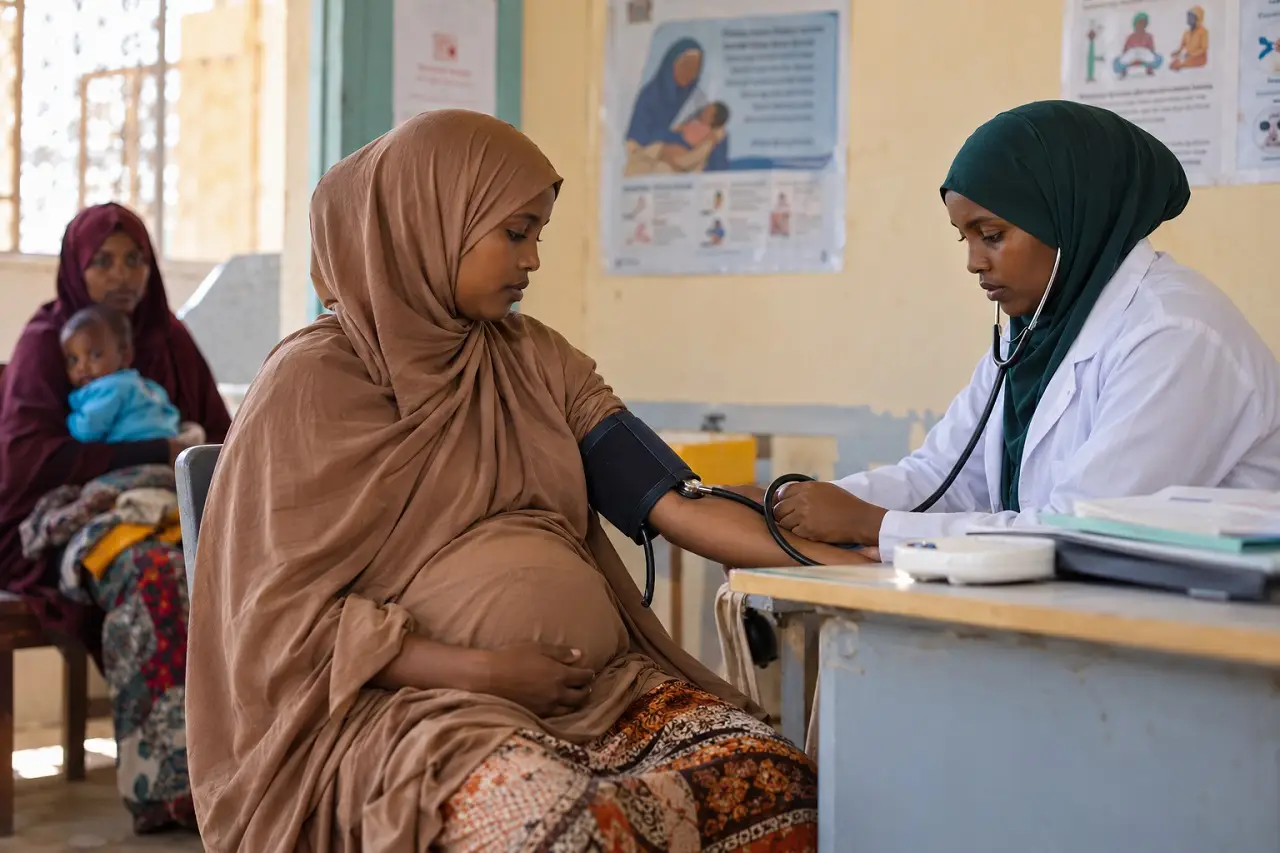
The findings also raise questions about how national health priorities can address gaps in service delivery, particularly in underserved communities, as Somaliland continues to review challenges across its healthcare sector.
They recommended strengthening the transition between antenatal care, skilled delivery and postnatal services, alongside improved referral and follow-up systems, community-based health education and measures to reduce financial and geographic barriers.
Particular attention, they said, should be given to rural and nomadic populations and regions where completion rates are lower.
The findings also underline the potential role of public information campaigns in helping women and families understand the importance of continuing care beyond antenatal visits.
Study limitations
The research was based on a secondary analysis of the 2020 Somaliland Health and Demographic Survey, rather than a newly conducted survey. Its findings therefore describe maternal healthcare use captured by that dataset and should not be interpreted as a direct measurement of current service utilisation in 2026.
The authors also noted that the analysis relied on self-reported information, which may be affected by recall or social desirability bias. Because the data were cross-sectional, the study cannot establish cause-and-effect relationships.
The researchers said the original survey did not provide all the information they would have needed to assess factors such as the quality and content of maternal health services.
Despite these limitations, the study provides nationally representative evidence on disparities in the continuity of maternal healthcare and identifies areas that may warrant further investigation and targeted intervention.
Strengthening health information systems may also support more evidence-based public health planning and help authorities identify service gaps.