

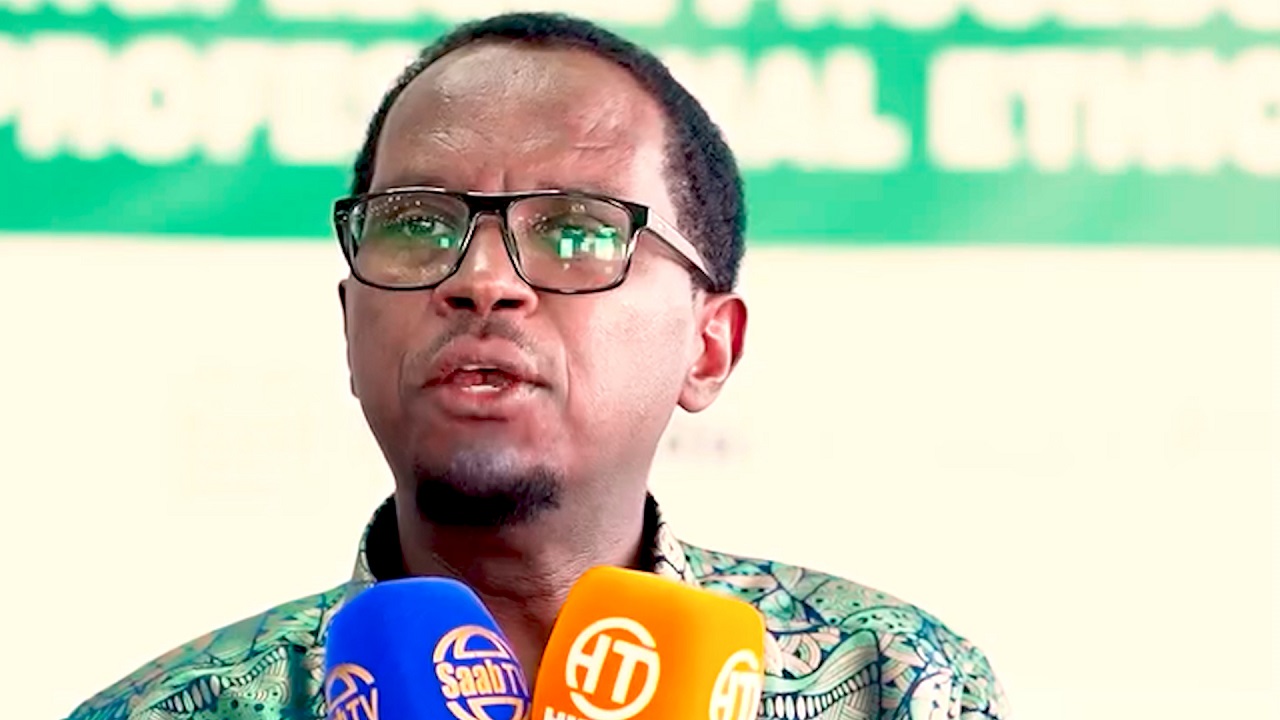
Hargeisa (SLpost)- Somaliland’s Chief Justice, Aden Haji Ali Ahmed, has openly criticised officials in President Abdirahman Mohamed Abdillahi’s administration, accusing them of failing to address public grievances and take responsibility for the duties entrusted to them.
Speaking about the role of government officials, Aden questioned why ministers and other senior figures were unable to resolve complaints coming from their own regions, leaving citizens to take their concerns directly to the president.
He said officials should be dealing with these issues themselves rather than allowing public frustration to build up and expecting the president to resolve every dispute.
His remarks came amid growing controversy over the Supreme Court’s decision to release poet Jiheeye and journalist Baylood on bail. The two had spent 75 days in Hargeisa Central Prison without a court ruling.
Aden explains why the two were released
During his speech, the chief justice explained how the bail decision came about, saying traditional elders and community representatives from poet Jiheeye’s home region had approached him to request the release of the two detainees.
He said the elders questioned why they could not be trusted to stand as guarantors for the men and explained that they had already offered the apology requested of them.
“They came to me, the elders and community leaders from one of the regions of the country. They asked whether they did not have the right, and whether they could not be trusted, to stand as guarantors for the young men in detention. They were asked to apologise, and they did,” Aden said.
He said he accepted their request, which led to the release of the poet and journalist on bail.
The explanation appeared to come against a backdrop of disagreement with some government officials over the court’s decision. Although Aden did not name anyone, his remarks suggested frustration with the way the matter had been handled.
‘Vacate your positions if you cannot fulfil your duties’
The chief justice also had a direct message for the government officials responsible for addressing the matter, questioning why they had failed to carry out the responsibilities assigned to them by the president.
“If you cannot fulfil the responsibilities for which the president appointed you, then vacate the positions you occupy,” he said.
His comments, delivered in a visibly frustrated tone, quickly attracted public attention and sparked widespread discussion across Somaliland.
Many people praised Aden for speaking out, particularly his criticism of officials who, in his view, had failed to respond to the concerns of the communities they were appointed to serve.
The episode has also raised questions about the handling of public grievances, the relationship between government officials and traditional community leaders, and the pressure surrounding judicial decisions.
From Silanyo to Irro: A Chief Justice through three presidencies
The Chief Justice of Somaliland’s Supreme Court, Aden Haji Ali Ahmed, has served under three successive presidents since his appointment in 2015, spanning more than 11 years of political transitions.
He was appointed by former President Ahmed Mohamed Silanyo, who left office in 2017. He then continued in the position throughout the presidency of Muse Bihi Abdi, whose term ended in 2024. He has also served under the current president, Abdirahman Mohamed Abdillahi Irro, since he took office in December 2024.
His tenure has therefore extended across three administrations, making him a continuing figure in Somaliland’s judicial leadership through successive changes of government.