

Analysis by Somalilandpost News
Somaliland’s economy remains highly exposed to external markets, with a substantial share of essential goods consumed by households and businesses sourced from abroad. This structural dependence means that developments beyond Somaliland’s control—including changes in global commodity prices, fuel costs, international shipping rates and foreign-exchange movements—can quickly translate into higher prices in local markets and increase the cost of living for ordinary households.
Essential commodities such as food, flour, sugar, cooking oil, fuel and construction materials are among the products for which Somaliland relies significantly on imports. When international production costs rise, transportation becomes more expensive or exchange-rate pressures increase the cost of foreign purchases, the resulting burden is ultimately transmitted through domestic supply chains to businesses and consumers.
This vulnerability raises a broader economic question: how can Somaliland strengthen its domestic economy so that external shocks have a smaller impact on prices, household purchasing power and economic stability?
One potential answer lies in expanding domestic productive capacity. Encouraging investment in local manufacturing and processing—particularly through models that enable citizens to pool their capital and invest collectively—could allow Somaliland to produce or process a greater share of the goods it currently imports. Such investment would not eliminate exposure to the global economy, but it could reduce dependence on imported finished products, retain more economic value within the country and create a stronger buffer against external price shocks.
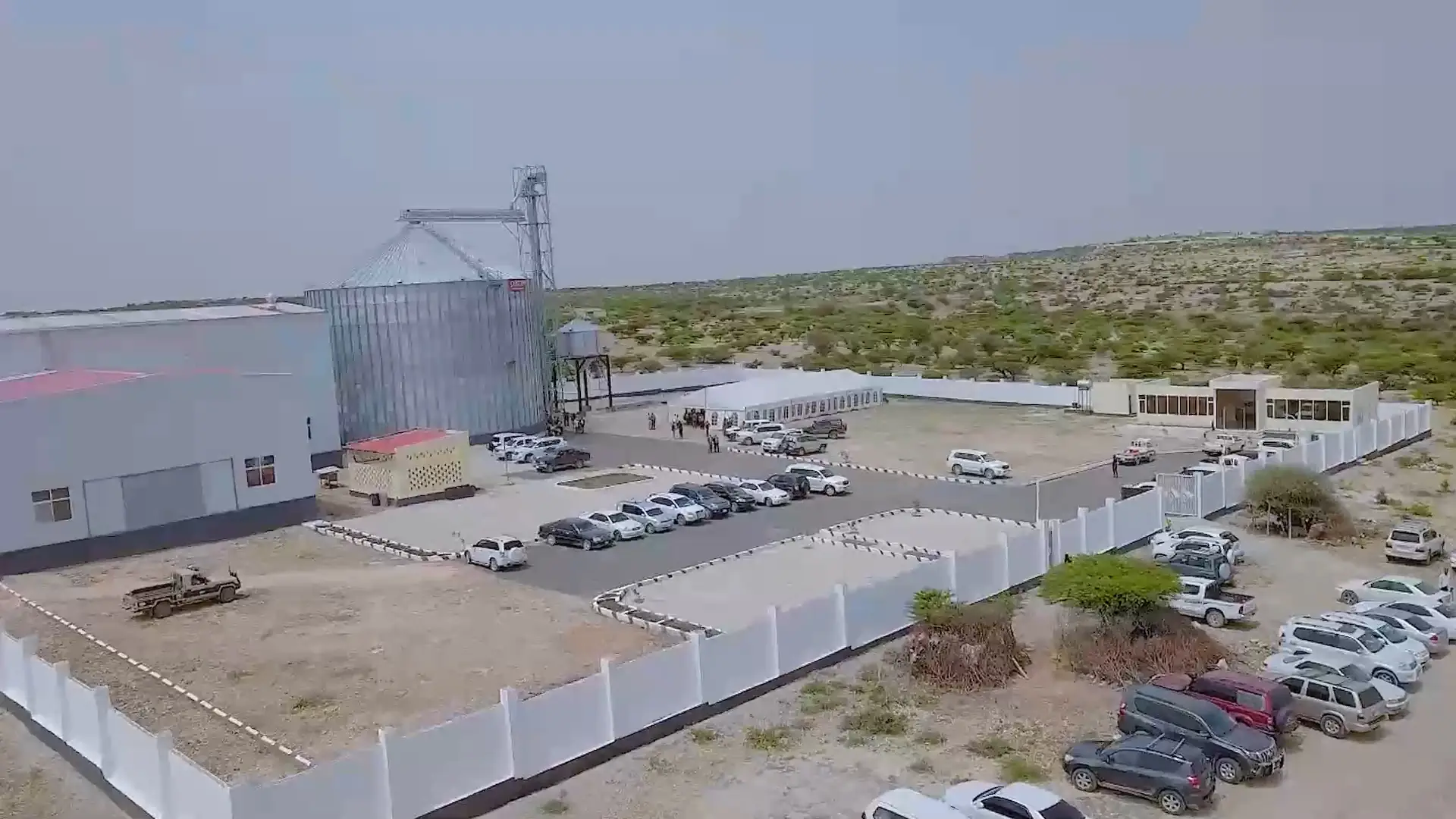
It is within this broader economic context that Somalilandpost News examines the potential significance of investments such as Boodhari Mills. Rather than presenting a single factory as a solution to inflation, this analysis considers Boodhari Mills as a practical example of how citizen-led productive investment could contribute to a wider strategy of domestic industrialization, economic resilience and reduced external dependence.
Boodhari Mills and the Importance of Domestic Production
Boodhari Mills is an example of how domestic investment can be directed toward manufacturing rather than remaining concentrated in import-based commerce.
The model is particularly relevant because large industrial projects often require capital beyond the capacity of an individual investor. By pooling resources through a shareholding structure, however, hundreds or thousands of citizens can potentially combine smaller investments into substantial industrial capital.
This transforms individual savings into productive assets.
The principle could be applied beyond flour production. Similar investment structures could support food processing, livestock industries, agricultural processing, construction materials, dairy production and other sectors with significant domestic demand.
A Potential Buffer Against Imported Inflation
Domestic manufacturing cannot eliminate inflation, particularly when factories themselves depend on imported machinery, raw materials or other inputs. Its value lies instead in reducing the economy’s exposure to external cost pressures.
Imported flour, for example, carries costs associated with international commodity prices, shipping, insurance, transportation and foreign exchange. A domestic mill can retain part of the production process within Somaliland and reduce reliance on imported finished products.
If domestic producers can supply a meaningful share of the market competitively, they can also increase the diversity of supply and potentially strengthen price competition.
This creates an important distinction: domestic production is not a guarantee of lower prices, but greater productive capacity can make the economy less vulnerable to sudden external price increases.
Keeping More Economic Value Inside Somaliland
Import dependence also has implications for foreign exchange.
An economy that imports most of its essential goods must continually use foreign currency to purchase products from abroad. Expanding domestic manufacturing can reduce the need to import finished products and allow a larger portion of economic activity to remain within the local economy.
A domestic factory generates value through employment, processing, transportation, distribution and business activity. Even where some inputs are imported, the production process itself creates economic activity inside Somaliland.
That makes industrial investment relevant not only to inflation but also to foreign-exchange pressure and economic development.
The Citizen-Investment Model
Perhaps the most significant lesson from Boodhari Mills is the potential of collective citizen investment.
Somaliland has many individuals who may not have sufficient capital to establish a factory independently but could participate in an industrial project through smaller shareholdings.
A properly regulated shareholding model can distribute both investment risk and potential returns among a wider group of citizens.
More importantly, it can redirect some domestic savings toward productive investment.
Instead of capital flowing primarily into property, retail trading or import businesses, a portion can finance enterprises that produce goods, employ workers and generate value domestically.
The result is a potentially stronger connection between household savings and national economic development.
From One Mill to a Broader Industrial Strategy
The strategic question for Somaliland is whether the principle demonstrated by Boodhari Mills can be scaled.
If citizens can successfully mobilize capital for flour production, similar models could potentially finance Food-processing plants, Dairy and meat-processing facilities, Agricultural processing, Leather and livestock-product industries Construction-material factories, and at least Packaging and storage businesses
The objective should not be to produce everything locally. Somaliland should instead identify goods for which domestic production is commercially viable and where local manufacturing could have meaningful effects on imports, employment and foreign-exchange demand.
This would amount to a pragmatic approach to reducing import dependence rather than attempting economic isolation.
Government Must Make Production Competitive
Citizen investment can provide capital, but it cannot by itself overcome structural constraints.
Government policy will determine whether domestic industries can compete.
Industrial investors require reliable electricity, water, roads, suitable land, access to finance and an efficient regulatory environment. High production costs can make locally manufactured goods more expensive than imported alternatives, undermining the very objective of domestic production.
The government could therefore consider targeted incentives for strategically important industries, including appropriate tax relief during initial investment periods, industrial land, infrastructure support and mechanisms that improve access to productive finance.
But support should be linked to performance.
Domestic manufacturers should be expected to maintain quality, improve efficiency and compete on price. Industrial policy should strengthen competition—not create protected monopolies that ultimately place a greater burden on consumers.
Why Boodhari Mills Matters
Boodhari Mills should therefore be viewed as more than an individual business. It provides a practical example of a broader economic proposition: citizens can pool capital, convert savings into productive investment and build industries that contribute to domestic supply.
The success of that approach could have effects beyond the factory itself. Greater domestic production can support employment, strengthen supply chains, retain economic value locally and reduce the economy’s exposure to disruptions in international markets.
Toward a “Produce Somaliland” Economy
The long-term objective should therefore be to move progressively from an economy that largely imports finished goods toward one that produces and processes a greater share of what it consumes.
That transition requires three elements working together:
- Citizen capital to finance productive enterprises;
- Private-sector expertise to operate them efficiently; and
- Government policy and infrastructure to create a competitive environment.
Boodhari Mills demonstrates the first part of that equation: the potential of pooled domestic investment to create industrial capacity.
The next step is to determine whether Somaliland can reproduce that model across other strategic sectors.
The Economic Opportunity
Somaliland cannot control global wheat prices, fuel costs, shipping rates or international exchange-rate movements. It can, however, determine how much of its domestic economy is exposed to them.
That is why expanding productive capacity should be regarded as part of an economic-resilience strategy.
Boodhari Mills offers a valuable case study: ‘when citizens combine their resources to finance domestic production, individual savings can become industrial capital, and industrial capital can help reduce dependence on imported finished goods’.
The broader lesson is clear. Somaliland does not need to stop trading with the world. It needs to become more capable of producing within its own economy.
If the Boodhari Mills investment is encouraged, scaled and supported by sound industrial policy, citizen investment could become an important instrument for reducing external dependence, strengthening domestic supply and making Somaliland’s economy more resilient to inflationary shocks originating abroad.
By Somalilandpost News