
Analysis by Somalilandpost News
Part One of Somalilandpost News’ analysis examined the first layer of President Irro’s exchange at the Council on Foreign Relations: Somaliland’s recognition case, its potential role in Red Sea and maritime security, the implications of possible U.S. recognition, investment opportunities, domestic security and critical minerals. Together, those exchanges showed how the President sought to present Somaliland’s political aspirations alongside broader questions of security, economic opportunity and strategic relevance to the United States.
Part Two moves from these domestic, economic and security considerations to the five geopolitical questions surrounding Somaliland’s international engagement in the United States. The discussion addresses Somaliland’s relationships with Israel, the United States and the UAE, the strategic significance of Berbera, its partnership with Taiwan amid U.S.-China competition, and prospects for deeper cooperation with Western institutions. These questions place Somaliland’s recognition campaign within a wider geopolitical environment and provide the basis for examining how President Irro responded to the international partnerships and strategic pressures surrounding Somaliland’s engagement with Washington.
Israel, the United States and the UAE
Ishan Tharoor, an Edward R. Murrow Fellow at CFR and columnist at The New Yorker, asked the president Somaliland’s relationships with Israel, the United States and the UAE under direct scrutiny, including possible foreign military activity and Somaliland’s approach to its engagement with Washington.
President Irro used the opportunity to distinguish between current foreign military presence and potential future security cooperation, while also addressing Somaliland’s position on Berbera.
He asked President Irro to clarify reports concerning possible Israeli and Emirati operations in Somaliland.
The President stated that there was no Israeli or U.S. military presence in Somaliland at the moment.
On the UAE, President Irro acknowledged the Emirati concession at Berbera airport but denied that there was Emirati military presence in Somaliland.
Tharoor also asked about reports that Somaliland had considered naming Berbera airport after Donald Trump and encouraging construction of a Trump Tower in Hargeisa.
The President responded that, with Trump’s acceptance, Somaliland could call the airport Trump Airport. He also noted that he had been among the first African leaders to suggest that Trump receive the Nobel Peace Prize. This comment drew applause from the audience.
Will Somaliland Be Caught Between Washington and Beijing?
Elliot Waldman, editor-in-chief of World Politics Review, asked about Somaliland’s relationship with Taiwan.
Waldman asked what Somaliland hoped to gain from Taiwan and whether Somaliland’s relationship with Taipei could become entangled in the wider geopolitical competition between the United States and China. President Irro defended Somaliland’s relationship with Taiwan.
He referred to the cooperation agreement signed in 2020 and highlighted collaboration in health, education, training and technology.
He acknowledged that China was unhappy with Somaliland’s relationship with Taiwan but emphasized Somaliland’s right to make its own foreign-policy decisions.
The President therefore framed the relationship as one based on Somaliland’s independent policy choices rather than as an alignment dictated by another power.
Higher Education and Western Partnerships
The final substantive question came from Elizabeth Bradley, president of Vassar College.
She asked about Somaliland’s ambitions for higher education and whether partnerships with American universities could produce mutually beneficial results.
President Irro described Somaliland’s higher-education sector as an institution-building project that began from a very limited base.
He highlighted the development of Amoud University and the University of Hargeisa and said Somaliland’s universities now graduate approximately 10,000 students annually.
He called for greater cooperation between Somaliland universities and universities in the United States.
Again, he linked the issue to recognition, arguing that Somaliland’s lack of recognized international status had historically limited its ability to establish formal partnerships with Western institutions.
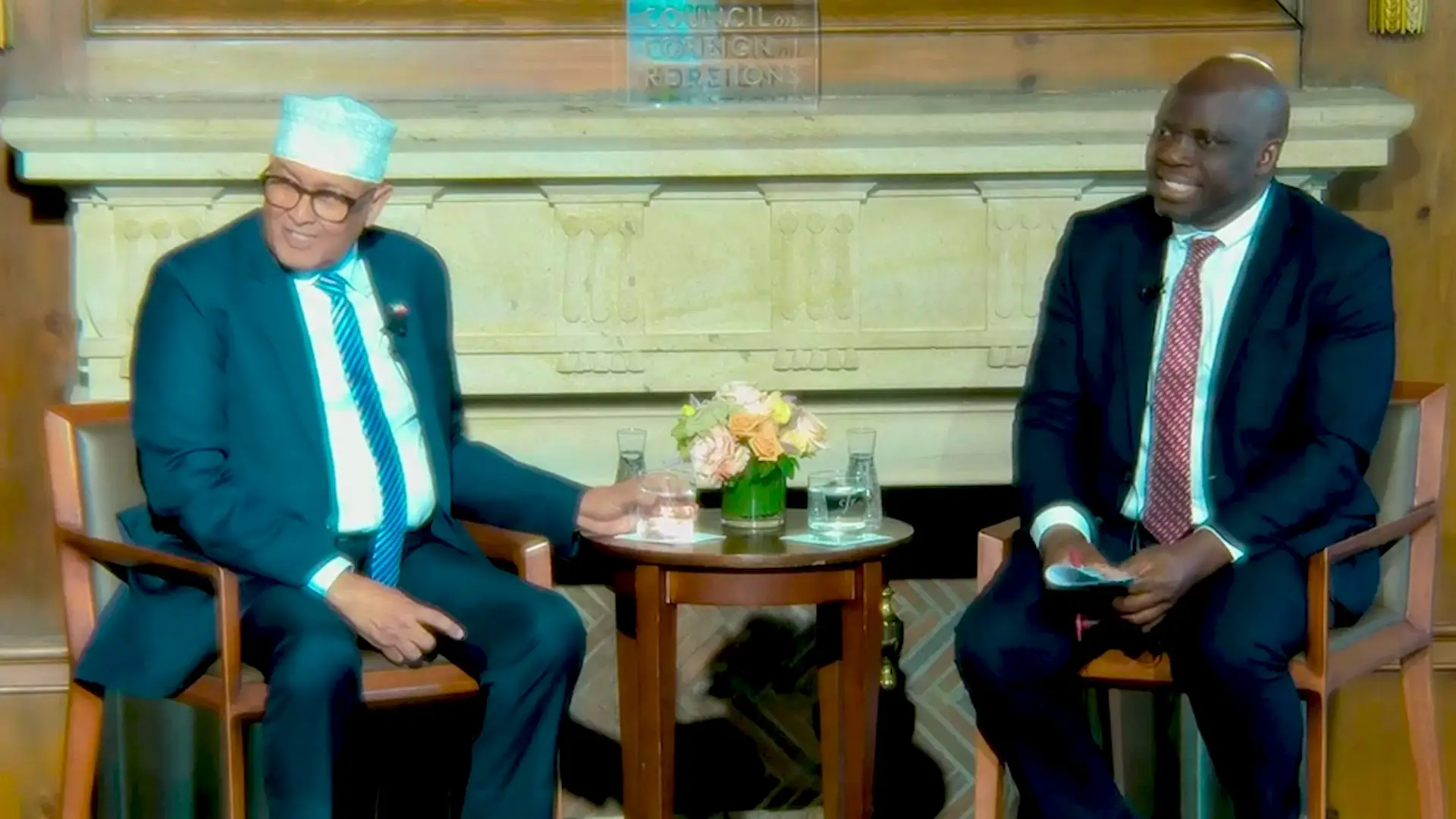
What the CFR Questions Reveal About Somaliland’s Diplomatic Message
Taken together, the questions reveal that the discussion was considerably broader than the traditional recognition debate.
President Irro was asked to address five interconnected areas:
- Recognition and international law: The Yugoslavia question directly examined the historical and legal logic behind Somaliland’s claim to separate statehood.
- Strategic security: The Red Sea question tested whether Somaliland could become a meaningful partner in protecting maritime trade and energy routes.
- Economic value: The investment and critical-minerals questions focused on what Somaliland could offer international investors.
- Geopolitical partnerships: The questions on Israel, the UAE, Taiwan and China examined whether Somaliland’s foreign relationships could affect its relationship with Washington and other major powers.
- Domestic stability: The question on al-Shabaab challenged Somaliland to explain why it has developed a different security trajectory from parts of Somalia.
From a Recognition Argument to a Strategic Partnership
One of the clearest themes emerging from the exchange is that President Irro repeatedly connected Somaliland’s demand for recognition to practical strategic interests.
His answers presented Somaliland as a potential maritime-security partner, an important trade corridor, A source of minerals and other natural resources, a destination for foreign investment, a partner in counterterrorism and regional stability, and at least a country seeking deeper educational and technological cooperation.
This framing goes beyond the historical argument over Somaliland’s 1960 independence and 1991 withdrawal from the Somali union.
It attempts to connect Somaliland’s recognition campaign to the strategic interests of foreign governments and investors.
CFR’s own background material identifies Somaliland’s geographic position, relative stability, investment potential and lack of international recognition as central elements in understanding its international strategy.
Conclusion
The CFR exchange is significant because it revealed the extent to which Somaliland’s international engagement is now being assessed through the interconnected lenses of security, economic interests, geopolitical partnerships and recognition.
The questions moved from Yugoslavia and international law to Red Sea security, from U.S. recognition and investment to al-Shabaab, and from Israel and the UAE to Taiwan, China, critical minerals and higher education.
Across those subjects, the President consistently presented Somaliland as a country seeking recognition while also offering itself as a potential security, economic and strategic partner to the United States and other international actors.
The central question emerging from the discussion was therefore not simply whether Somaliland wants recognition.
It was how Somaliland’s geography, security record, economic resources and international partnerships could fit into the wider strategic interests of the United States and its partners in the Horn of Africa and the Red Sea.