
A government may pursue dialogue to manage a dispute without conceding the central political objective it seeks to protect.
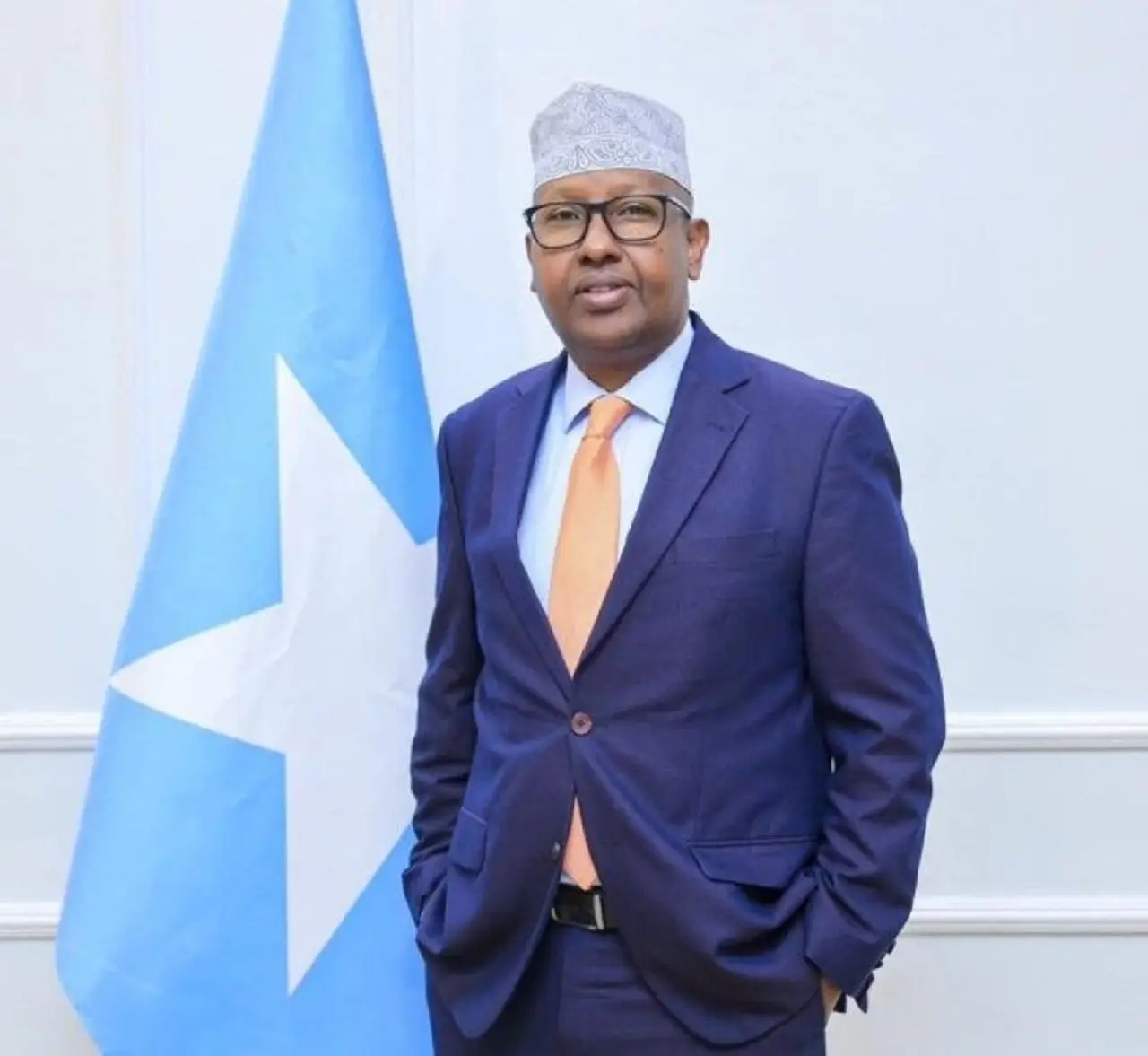
Hargeisa (SLpost) – Somaliland’s Minister of National Defence, Mohamed Yusuf Ali Ahmed, has strongly rejected remarks by Somalia’s Defence Minister Ahmed Moallim Fiqi, who claimed that Mogadishu provided substantial financial support for President Irro’s 2024 election campaign in the expectation that he would be more open to negotiations over Somali unity.
Speaking in Mogadishu, Somalia’s Defence Minister Ahmed Moallim Fiqi claimed that his government financed President Abdirahman Irro’s election campaign in 2024, saying Mogadishu backed him because it considered him more willing than his predecessor to discuss Somali unity.
Fiqi’s remarks have reignited tensions between Hargeisa and Mogadishu over Somaliland’s political future, the legitimacy of its independence aspirations and the nature of dialogue between the two sides. Fiqi said the Somali federal government had backed Irro because it viewed him as more willing than his predecessor, Muse Bihi Abdi, to discuss unity and negotiate new terms for a political settlement.
His comments prompted a response from Somaliland’s Defence Minister, Mohamed Yusuf Ali Ahmed, who rejected the suggestion that President Irro’s electoral mandate could be attributed to political or financial support from Somalia, insisting that the president’s mandate came from Somalilanders.
Somaliland says electoral mandate belongs to voters
In his statement, Mohamed Yusuf Ali argued that President Irro’s legitimacy rests on a direct electoral mandate rather than the political calculations of neighbouring Somalia.
Abdirahman Irro won Somaliland’s presidential election on November 13, 2024, securing 63.92 per cent of the vote, according to the published election results. His victory led to a peaceful transfer of power from Muse Bihi Abdi, demonstrating the importance of electoral competition in Somaliland’s political system.
The defence minister contrasted Somaliland’s electoral experience with Somalia’s continuing difficulties in establishing a nationwide, direct electoral system. Mr Ali argued a government that has not yet achieved universal direct elections across Somalia should not presume to determine the political direction of Somaliland.
Somalia’s Defence Minister Ahmed Moallim Fiqi, known by the nickname “Xuub-Caaro” (“Spider’s Web”) in Somaliland political circles, has yet to provide verifiable evidence detailing how much money his government allegedly provided or how the funds were transferred to President Abdirahman Mohamed Abdillahi Irro during Somaliland’s November 2024 presidential election campaign.
The central issue for Somaliland is therefore not simply whether Mogadishu expected Irro to pursue dialogue, but whether Somalia’s leadership believes its political preferences should influence the choices of Somaliland’s electorate.
Independence is not a negotiating concession
The dispute goes beyond the question of campaign financing. At its heart lies a fundamental disagreement over Somaliland’s status and the purpose of negotiations with Somalia.
Somaliland became independent from Britain on June 26, 1960, before entering into a union with the Italian-administered territory of Somalia on July 1 of that year. Somaliland subsequently restored its declaration of independence on May 18, 1991, following the collapse of Somalia’s central government and the devastating genocide inflicted on Somalilanders under the military government of Mohamed Siad Barre.
For Somaliland, these events form the historical and political foundation of its claim to statehood. Because that union failed to deliver equitable representation and protection, while the atrocities of the late 1980s remain central to the Somaliland’s collective memory.
In his response to Fiqi, Somaliland’s defence minister rejected the suggestion that the historical question could be settled simply by returning to negotiations over the terms of unity.
His position reflects Hargeisa’s longstanding argument that dialogue cannot automatically be interpreted as acceptance of reunification. Somaliland maintains that any engagement with Somalia must recognise the political reality created by its 1991 declaration and the wishes of its people.
Fiqi’s remarks raise questions about Mogadishu’s expectations
Fiqi’s account is politically significant because it suggests that Somalia’s federal government viewed the 2024 presidential election in Somaliland partly through the lens of its own national-unity agenda.
According to his remarks, Mogadishu believed Irro would be more receptive to discussions about unity than Muse Bihi and was prepared to consider new terms for negotiations. Fiqi also expressed disappointment over Somaliland’s subsequent international engagement, particularly its relations with Israel.
“Irro was supported here and financed here. He was backed because he said he was more reasonable than those who came before him, that he was willing to discuss unity and that he was ready for us to agree on new conditions,” Fiqi said adding that his government provided the funding.
From Somaliland’s perspective, this interpretation risks confusing a willingness to engage diplomatically with a willingness to abandon independence.
President Irro’s election victory gave him a mandate to govern Somaliland. It did not, by itself, establish that voters had authorised a change in the country’s position on independence. Nor does Fiqi’s allegation demonstrate that Somaliland’s electorate was aware of, or influenced by, any purported financial support from Mogadishu.
The distinction is important: a government may pursue dialogue to manage a dispute without conceding the central political objective it seeks to protect.
If Somalia expected Irro’s presidency to create an opening for renewed unity negotiations, Fiqi’s remarks suggest that the two governments may have held fundamentally different expectations about what dialogue would achieve.
Somaliland defends its right to pursue international partnerships
The defence minister also reaffirmed Somaliland’s position that it should be free to establish international partnerships according to its own strategic and economic interests.
Somaliland has pursued relations with a range of international partners, including Ethiopia, Taiwan, the United States and Israel. These relationships are linked to its efforts to expand diplomatic engagement, attract investment, improve access to international markets and strengthen its regional position.
Somaliland’s location along the Gulf of Aden, near the Bab el-Mandeb maritime corridor, gives its external partnerships wider significance for Red Sea security, trade and regional diplomacy.
A deeper crisis of trust between Hargeisa and Mogadishu
Fiqi’s allegations have added another layer of mistrust to an already difficult relationship.
Somaliland and Somalia have held dialogue initiatives over the years, but the fundamental disagreement over sovereignty has prevented a lasting political settlement. The latest exchange illustrates how different the two sides’ assumptions remain: Mogadishu continues to frame negotiations around unity, while Somaliland’s position centres on its claim to independent statehood.
The controversy also highlights the political risks of making unsubstantiated claims about electoral financing. Without documentary evidence or independent verification, Fiqi’s assertion cannot be treated as proof that Somalia financed Irro’s campaign or influenced the election outcome.
For Somaliland, the more consequential question is whether Mogadishu is prepared to engage with its leadership on the basis of political realities rather than expectations that a change of president will reverse the country’s independence trajectory.
The defence minister’s response makes clear that Hargeisa rejects that premise. Somaliland’s government maintains that its future must be determined by its own people and institutions.
The wider message from Hargeisa is that dialogue and independence are not mutually exclusive. Somaliland may engage with Somalia on matters of mutual interest, but its leaders insist that such engagement does not amount to surrendering the political aspirations that have shaped the success of their nationhood since 1991.

