

Hargeisa (SLpost)- The government of the republic of Somaliland has accused Somalia, Djibouti and Turkiye of involvement in what it describes as external interference linked to the prolonged conflict in the western regions of Awdal and Salal, alleging that outside actors sought to exploit local tensions and undermine peace efforts.
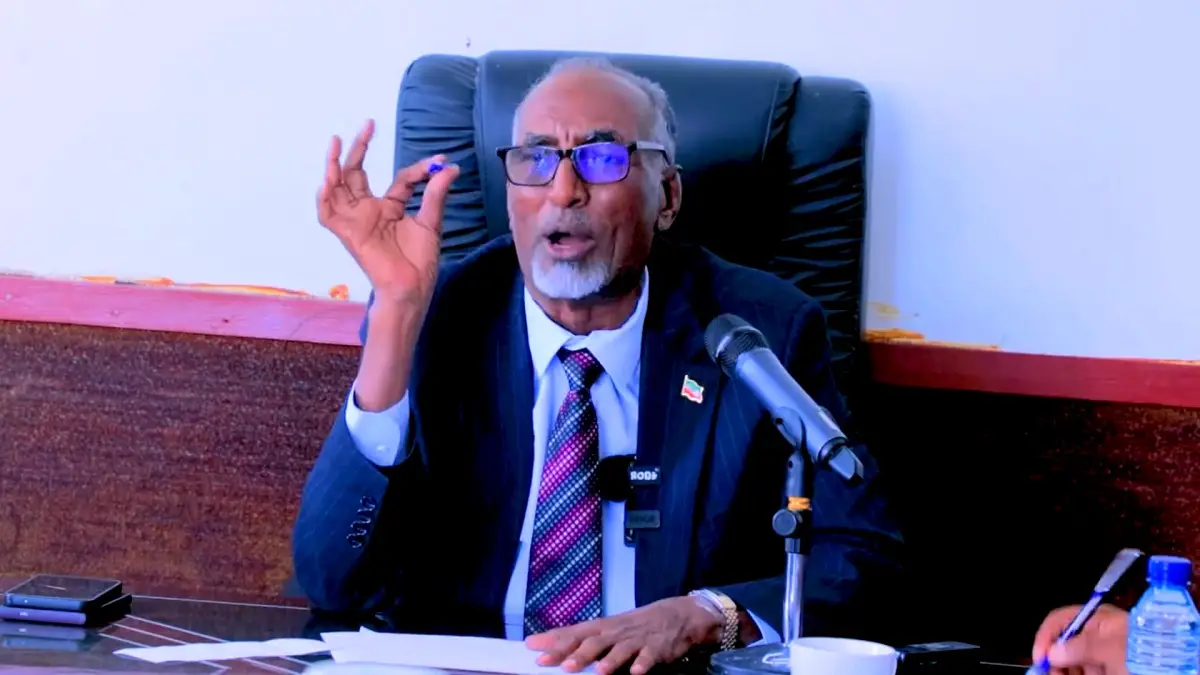
Somaliland’s Minister of Interior and National Security, Abdalle Mohamed Carab, made the allegations while discussing the security situation in the western regions, arguing that the violence should not be viewed solely through the lens of an internal clan dispute.
“The problem that existed in the western regions was not clans fighting each other; it was discord coming from outside,” Minister Abdalle said.
The minister specifically accused Somalia and Djibouti of being involved in what he described as external interference. He also singled out Turkiye, saying Somaliland suspects Ankara of playing a role in efforts that could prevent communities in the region from reaching a lasting peace.
“We suspect Turkiye, and it is interference working to prevent these people from finding peace,” he said.
A Conflict with Local and Regional Dimensions
The violence in Awdal and Salal has emerged amid wider political, territorial and communal tensions in Somaliland’s westernmost areas. The situation has attracted particular attention because the regions border Djibouti and Ethiopia and are connected to wider political debates involving Somaliland, Somalia and regional actors.
A recent assessment by the European Union Agency for Asylum (EUAA) noted that tensions in Awdal intensified during late 2025 around plans to hold a cultural event associated with Xeer Ciise in Zeila. The assessment said the resulting protests became intertwined with broader disputes concerning influence, territory and political alignment. It also noted that some demonstrations featured the flag of the Awdal State movement and reflected demands for greater regional autonomy and closer alignment with Somalia’s federal government.
The EUAA assessment also points to the wider geopolitical significance of the region, noting that communities in Awdal and Salal have cross-border ties extending into Djibouti and Ethiopia. It further observed that Djibouti has been associated with narratives concerning the Issa community’s cross-border identity, while Ethiopia has maintained strategic interests around Zeila and access to the Red Sea.
These dynamics have made the western regions particularly sensitive at a time when Somaliland’s international position has undergone significant change.
Somaliland Links the Conflict to Wider Political Pressure
Minister Abdalle argued that the situation became more politically sensitive following Somaliland’s international recognition, saying that the development had produced what he described as “many enemies” opposed to Somaliland.
He specifically referred to Turkiye in that context, alleging that external actors were interested in preventing the western communities from reaching a durable settlement.
The minister also compared the situation in Awdal and Salal with earlier unrest in Laascaanood, suggesting that disputes over land and local grievances could be used as entry points for wider political destabilisation.
He further claimed that incidents including vehicles being intercepted on roads were intended to disrupt planned peace meetings between local communities.
According to the minister, the communities involved have historically lived alongside one another and did not have a sustained pattern of inter-clan warfare.
“The people of the area are people for whom the Somaliland cause is important; they are related and have never historically fought each other,” he said.
Government Intensifies Peace Efforts
The allegations come as Somaliland has simultaneously intensified its efforts to resolve the conflict through traditional mediation and government-led negotiations.
Earlier this month, a government delegation involving the Interior Ministry and members of the House of Elders reportedly completed an initial phase of mediation in parts of Awdal and Salal. Traditional elders and community representatives reached an agreement aimed at strengthening security and preventing renewed clashes, while further consultations were planned to secure a broader peace agreement.
The peace process subsequently became a national priority.
On February 31, President Abdirahman Mohamed Abdullahi (Cirro) convened a national consultative meeting involving the leadership of the two houses of Parliament, cabinet ministers and the National Peace Committee. The meeting focused on finding a lasting solution to the Awdal–Salal conflict, with the President emphasising dialogue, traditional mediation and the protection of civilian lives.
The government has framed the peace initiative as part of a broader effort to prevent further loss of life and restore social cohesion in the affected communities.
President Cirro has also publicly urged communities in the western regions to consolidate the peace process, while warning against actions that could reignite violence.
Turkiye’s Role in the Region
Turkiye’s name in the Somaliland minister’s allegations is particularly significant because Ankara has maintained extensive political, economic and security relations with Somalia.
In January 2026, Turkiye’s Deputy Foreign Minister Musa Kulakkaya reaffirmed Ankara’s support for Somalia’s territorial integrity during an extraordinary session of the Organisation of Islamic Cooperation concerning Somaliland. These established ties help explain why Somaliland officials may view Türkiye’s regional engagement through a strategic lens.
The Recognition Factor
The conflict has also unfolded against a rapidly changing regional diplomatic environment.
Somaliland’s international recognition has altered the political context surrounding the territory, while Somalia, Turkey and other regional governments have continued to oppose moves that challenge Somalia’s territorial-integrity position.
Against this backdrop, instability in Awdal and Salal carries implications beyond the immediate communities involved. The region’s proximity to Djibouti, its Red Sea coastline and the strategic importance of Zeila give local security developments a wider geopolitical significance.
For Somaliland’s government, maintaining stability in the west is therefore both a domestic security priority and an important component of its broader argument that Somaliland is capable of exercising effective governance and maintaining peace.
Peace Remains the Central Test
Despite the government’s allegations of foreign interference, the immediate challenge remains the consolidation of peace between the communities affected by the violence.
Previous experiences elsewhere in Somaliland demonstrate that government security measures alone may not be sufficient to resolve disputes involving land, customary authority and community relations. Sustainable settlements generally require the participation of traditional elders, religious leaders, women, youth and local political representatives.
The government’s current peace process therefore faces two parallel challenges: preventing renewed violence on the ground and addressing the deeper political and social grievances that contributed to the conflict.
For Somaliland, the success of the Awdal and Salal reconciliation process could have consequences extending well beyond the affected districts. A durable settlement would strengthen internal cohesion and reinforce the government’s broader message that disputes can be resolved through dialogue rather than armed confrontation.
Reporting by Somalilandpost News